How to Clean a Motorhome Toilet Cassette and Neutralise Odours
Even a regularly emptied toilet cassette can develop an unpleasant smell over time. Residue builds up on the inner surfaces that rinsing doesn't always fully remove. This guide explains how to clean a motorhome toilet cassette and how to use FRESH TANK for occasional deep care of an empty cassette.
Why does the toilet cassette smell even after emptying?
Emptying the toilet cassette removes its contents, but doesn't necessarily remove all residue from the inner walls, corners, valves and the area around the discharge opening. Build-up gradually forms in hard-to-reach spots and becomes a source of stubborn odours.
The problem is more pronounced if the cassette is only quickly rinsed after emptying and immediately put back into use. Small residues cling to the surfaces, where bacteria then start to develop and contribute to the odour.
The intensity of the smell is also affected by high temperatures, longer intervals between emptying, worn seals and insufficient system ventilation. In summer, problems appear much faster than during the colder part of the year.
Classic chemical toilet fluid or tablets are meant for use during regular toilet operation. They help break down the cassette's contents, but occasional deep care remains an important part of maintenance. FRESH TANK is used as an odour neutraliser for the chemical toilet and as a care product for the empty cassette – not as a replacement for regular toilet chemicals.
How to use FRESH TANK for deep care of the toilet cassette?
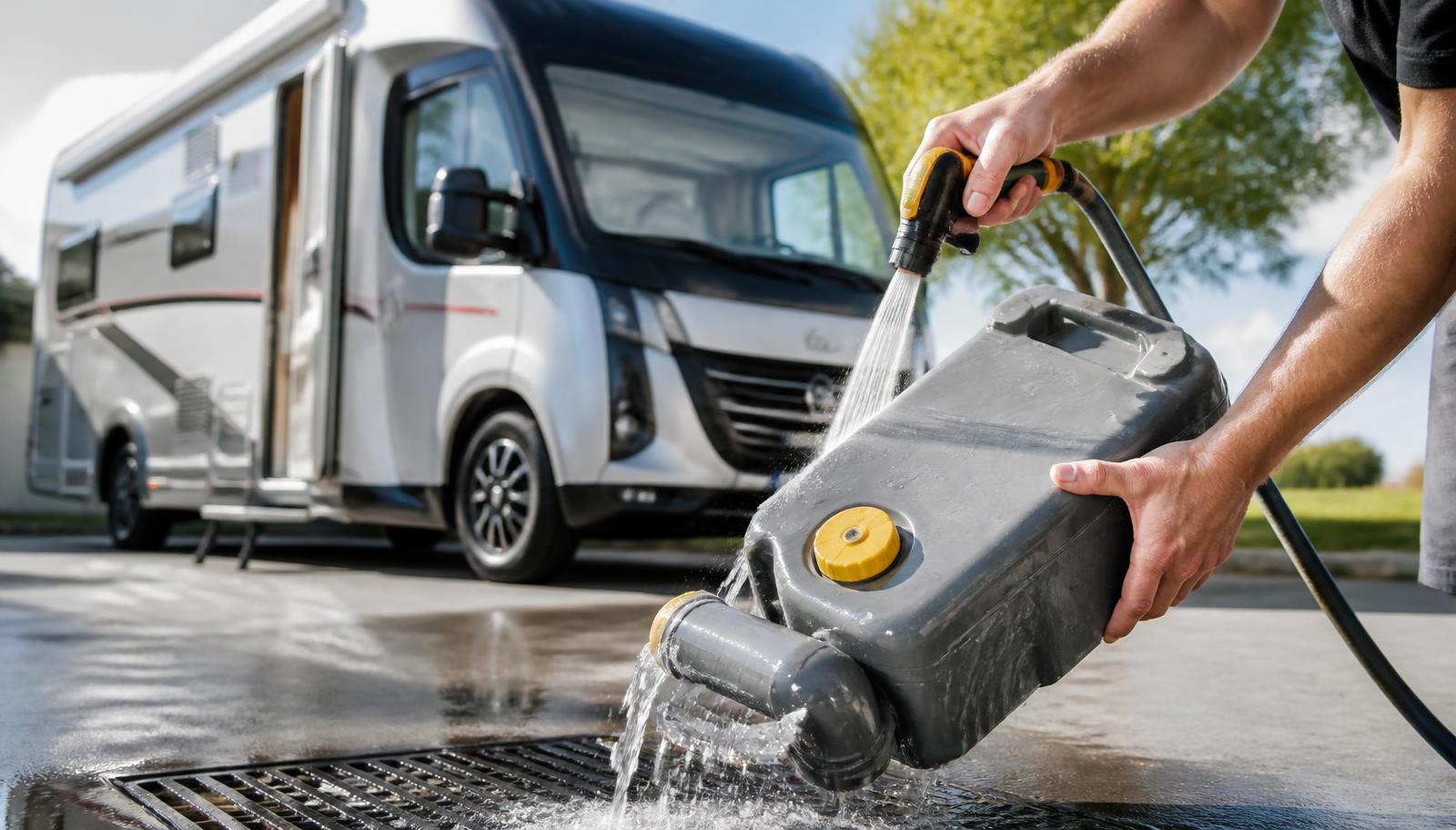
Before using FRESH TANK, the toilet cassette must be completely emptied and pre-cleaned. First rinse it several times with clean water to remove any remaining contents and larger debris.
Then fill the cassette with fresh water right to the top and add 1.5 to 2 decilitres, i.e. 150–200 ml, of FRESH TANK. Close the cassette well and gently shake or turn it so the solution reaches all inner surfaces.
Leave the product to work for at least three hours. It's best to carry out the neutralisation when the solution can stay in the cassette for longer, as longer contact allows it to work more thoroughly on the sources of the unpleasant odour.
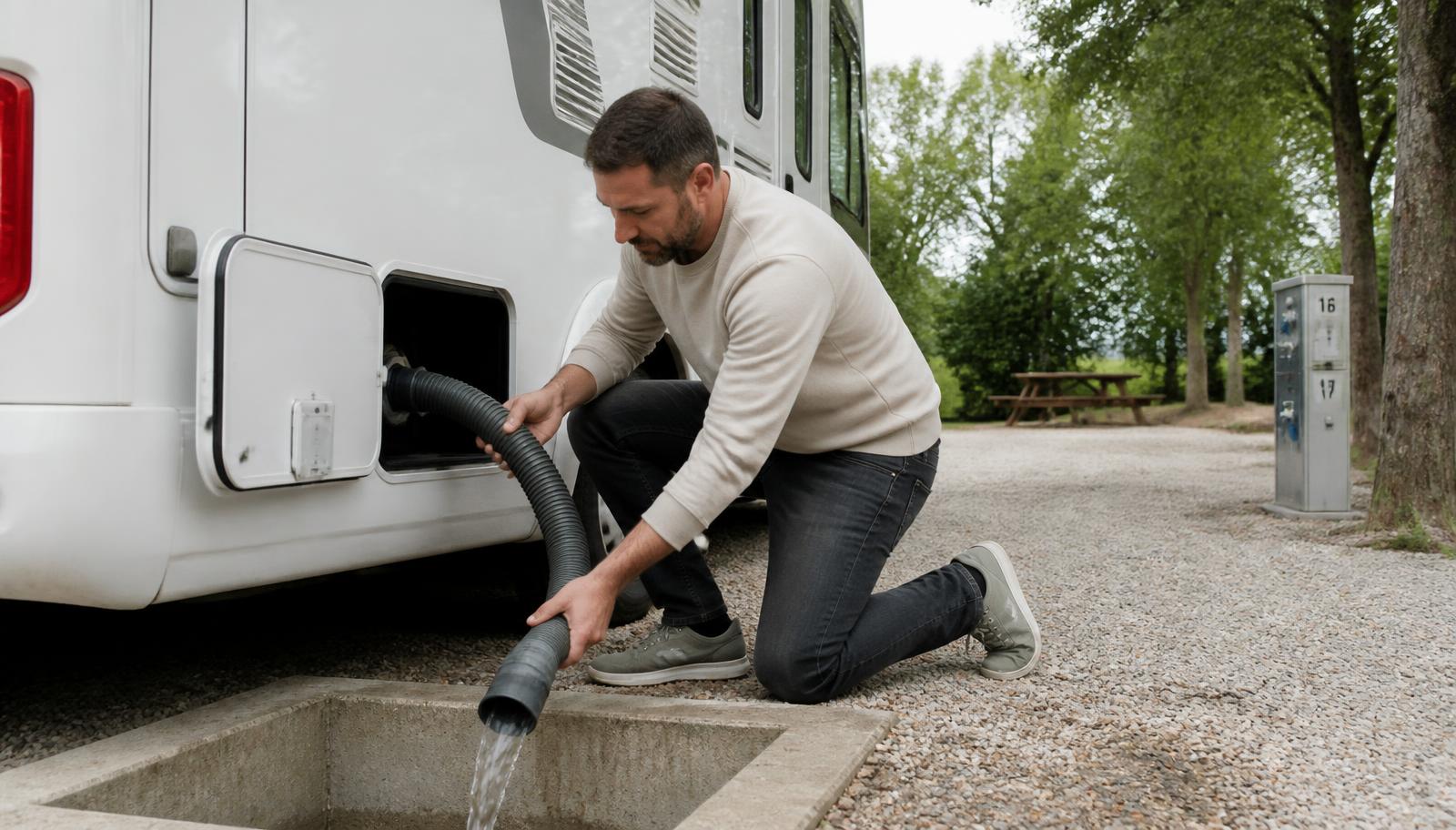
Once the process is complete, empty the contents only at a site designated for emptying toilet cassettes. Then rinse the cassette again with clean water and prepare it for the next use.
- the upper parts of the cassette
- inner corners
- the area around the valve
- the discharge opening
- surfaces not covered by water during normal rinsing
Does FRESH TANK replace chemical toilet fluid or tablets?
FRESH TANK is not designed to break down waste and does not replace regular chemical toilet fluid, sachets or tablets. It's important to understand this difference clearly, as these are two distinct types of use.
Classic chemical toilet fluid is added to the cassette before regular toilet use. Its role is to treat the cassette's contents, limit odour formation during use and, depending on the product, help break down waste or toilet paper.
FRESH TANK follows a different procedure: the cassette must be completely emptied, rinsed, filled with fresh water and left to work for several hours. Its purpose is the occasional neutralisation of stubborn odours and care of the cassette's inner surfaces.
After the FRESH TANK deep-care process, empty the cassette and only then prepare it again for regular use with a dedicated chemical toilet product. FRESH TANK is therefore a supplement to regular maintenance, not a substitute for everyday toilet chemicals.
What mistakes should be avoided when cleaning the toilet cassette?
The first common mistake is using FRESH TANK in a full or unclean toilet cassette. The product is not designed to break down waste, so it should always be used for deep care only after the cassette has been emptied and rinsed.
The second mistake is too short a contact time. According to the instructions, the product should work in the cassette for at least three hours, and longer if possible, so the solution stays in contact with the inner surfaces for longer.
It's also important to fill the cassette right to the top. If only a small amount of water is added, the solution won't reach the upper surfaces and all the spots where build-up collects. Don't shake the cassette aggressively – gentle shaking and turning is enough, and check beforehand that the valves and caps are properly closed.
FRESH TANK is suitable for plastic surfaces and stainless steel, but not for iron or corrosion-sensitive metal surfaces. Avoid contact with eyes, keep the product out of the reach of children and follow the safety instructions on the label. Empty the cassette's contents after cleaning only at an authorised site.
Key takeaways
- Emptying the toilet cassette alone doesn't always remove all build-up from the inner surfaces.
- FRESH TANK is used in an empty, pre-cleaned cassette.
- Fill the cassette to the top and add 150–200 ml of the product.
- Leave the solution to work for at least three hours, longer if possible.
- FRESH TANK neutralises sources of unpleasant odours, but doesn't break down waste and doesn't replace regular toilet chemicals.
FAQ
How often should a toilet cassette be deep cleaned?
It depends on use. The process is worthwhile when a stubborn odour appears, before longer storage, or as part of occasional thorough maintenance of the cassette.
How much FRESH TANK should be added to the toilet cassette?
Add 1.5–2 dl, i.e. 150–200 ml, to an empty, cleaned cassette filled with fresh water right to the top.
How long should FRESH TANK be left to work in the toilet cassette?
The product should work for at least three hours. It's best carried out when the solution can stay in the cassette for longer.
Does FRESH TANK break down waste?
No. FRESH TANK is not designed to break down waste and does not replace chemical toilet fluid, tablets or sachets.
Can FRESH TANK be added to the cassette during regular use?
For the neutralisation process described, it's used in an empty, pre-cleaned cassette filled with fresh water. For regular toilet use, use a dedicated chemical toilet product.
Products mentioned in this article
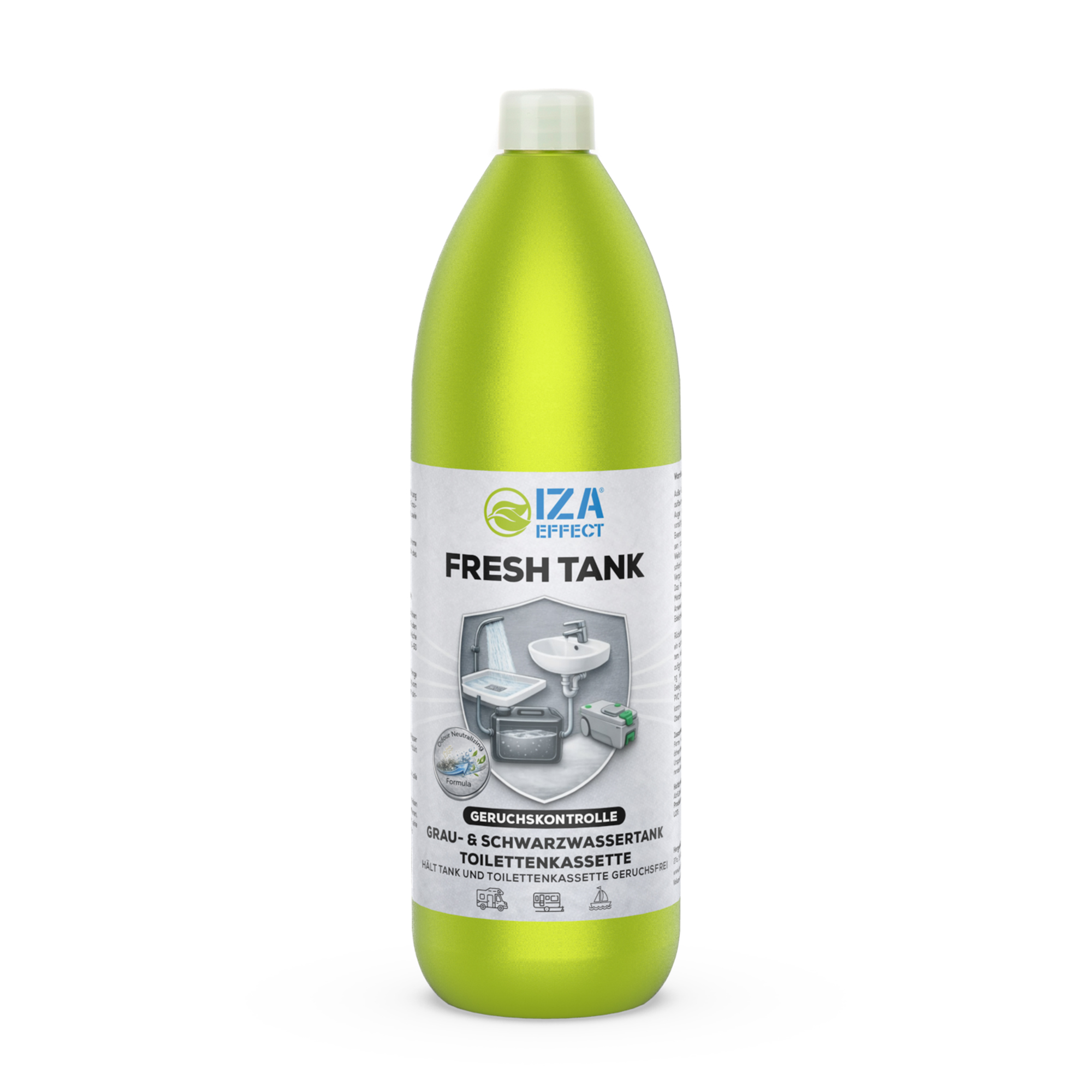 Fresh TankPurpose-built cleaner and odour neutraliser for grey water tanks, drains and toilet cassettes in motorhomes, caravans, campervans and boats.
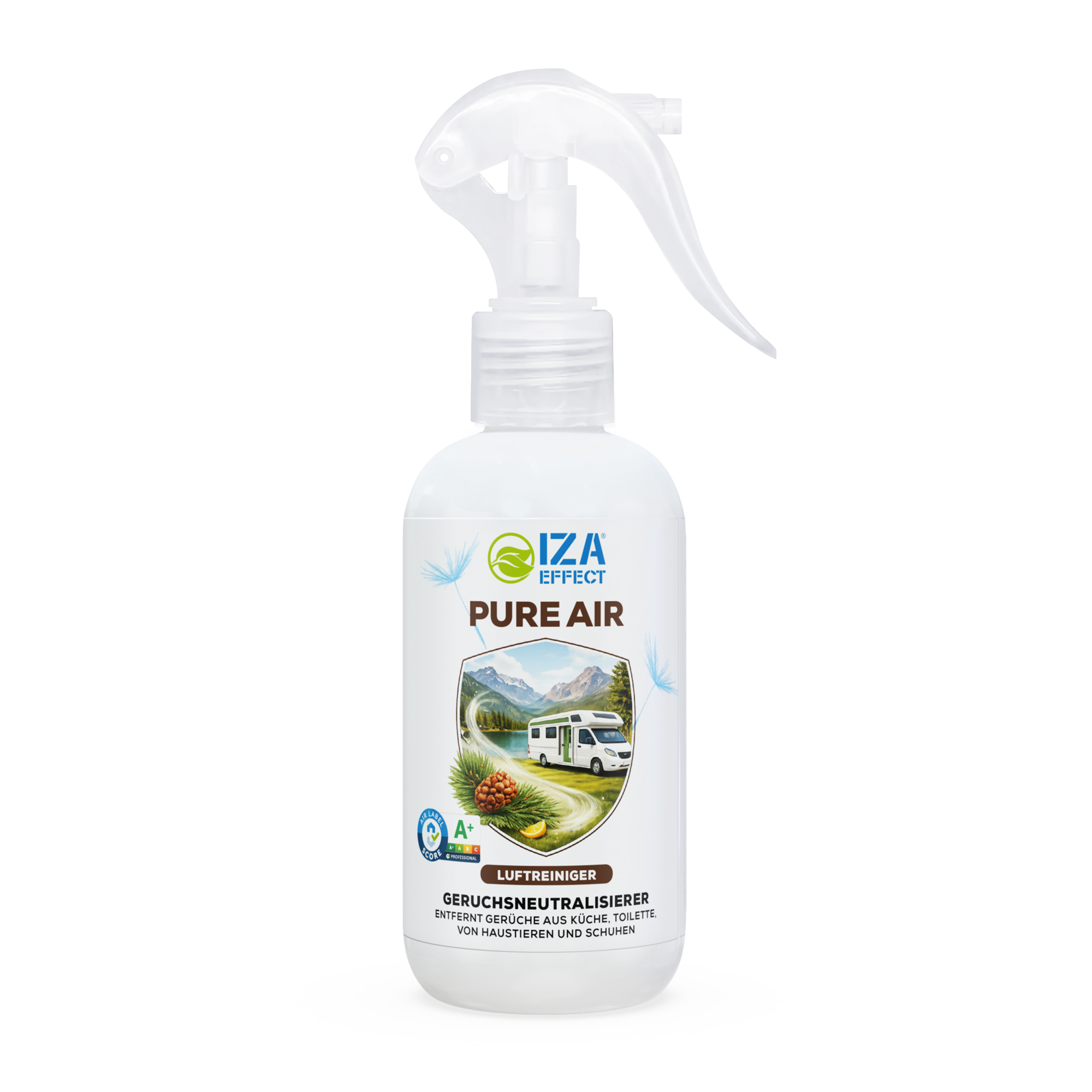 Pure Air SprayA natural spray for fresh air in your motorhome, vehicle cabin, mobile home and tent — without artificial fragrances.
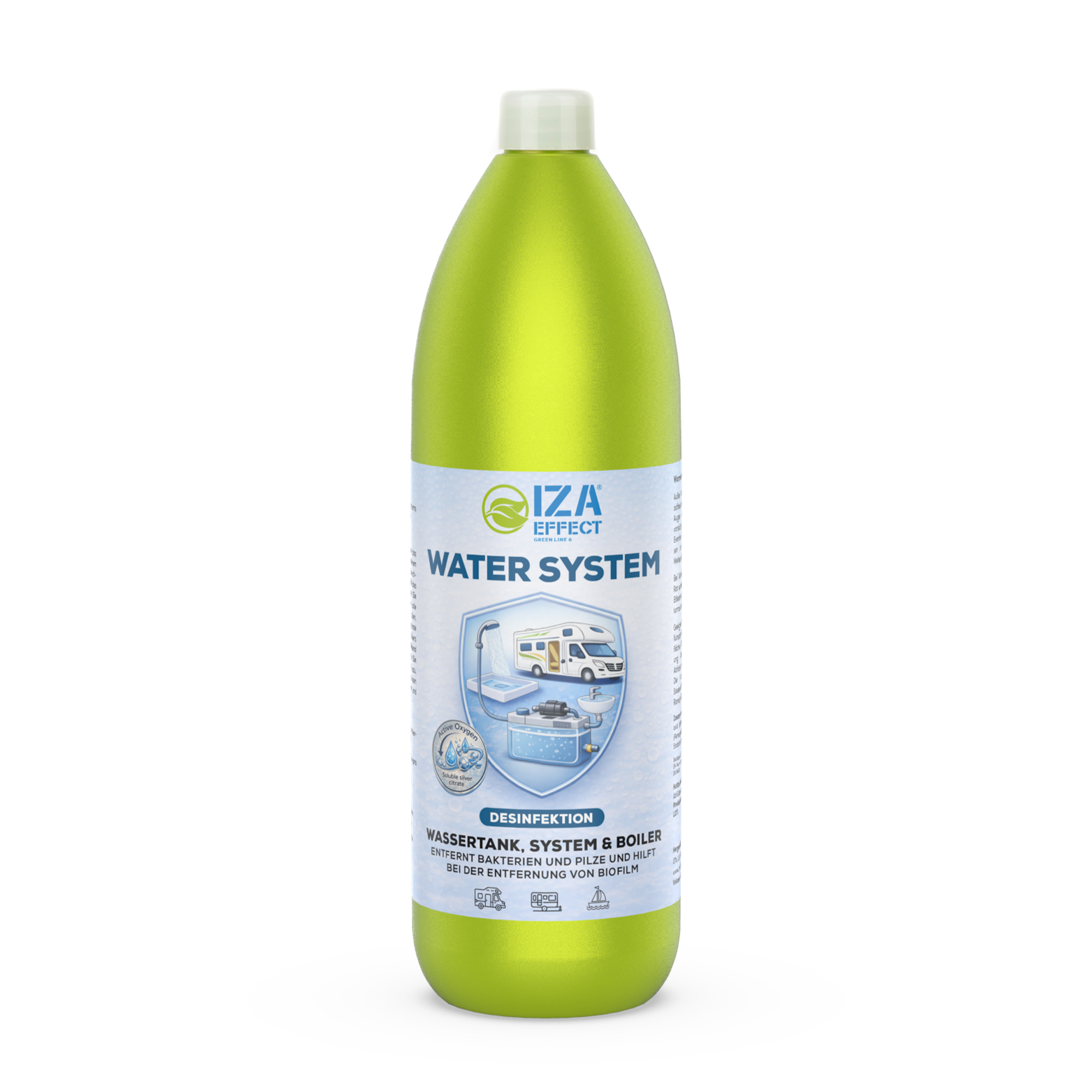 Water System CleanerA natural cleaning and disinfecting agent for the fresh water system in motorhomes.
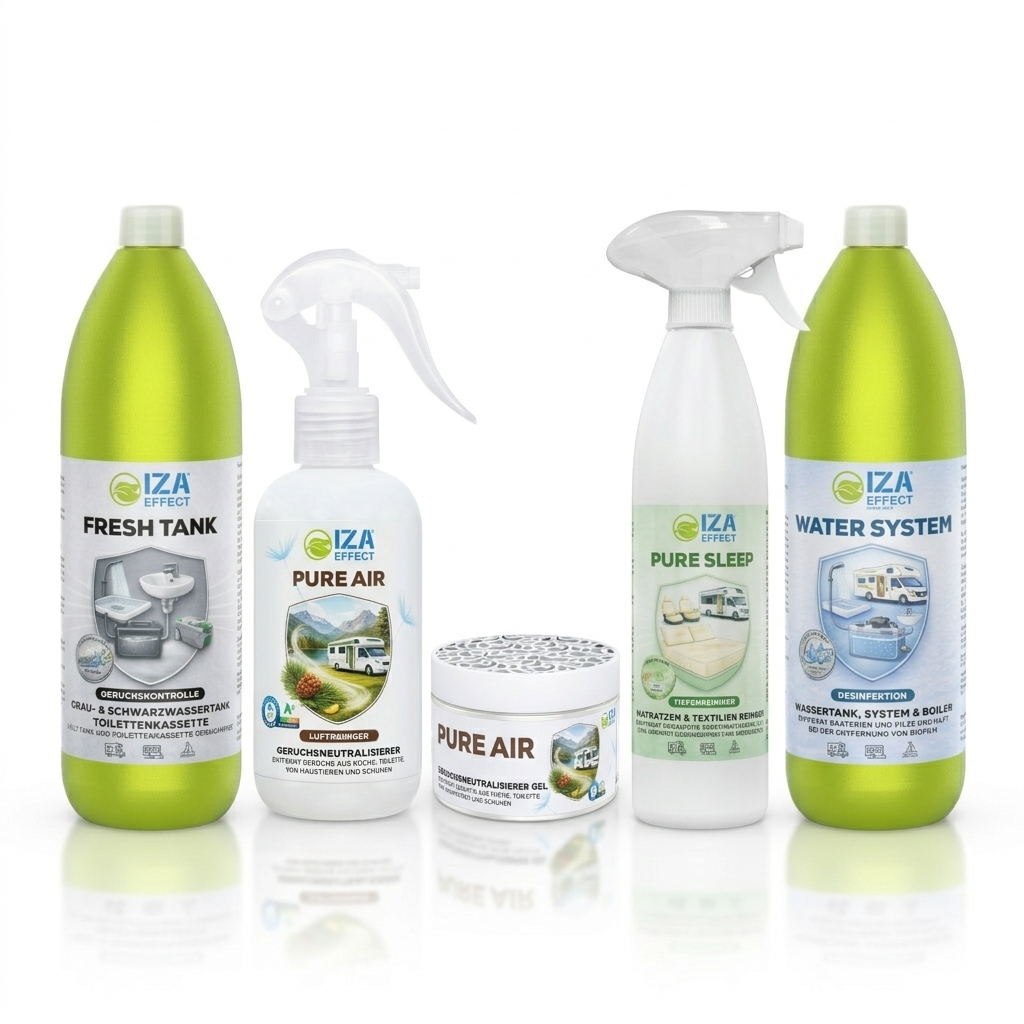 Iza Effect Caravaning SetA complete natural care kit for your motorhome — everything you need on the road, with a 15% discount.