Fresh water system hygiene in your motorhome — the complete guide
The fresh water tank is one of the most important parts of a motorhome. Water travels through pipes, pump, boiler and taps — rinsing alone is often not enough.
Why does the fresh water tank need cleaning and disinfection?
At first glance the tank may look clean, but deposits build up on the inner walls over time. The problem isn't just the tank — it's also the pipes, connections, pump, boiler and taps.
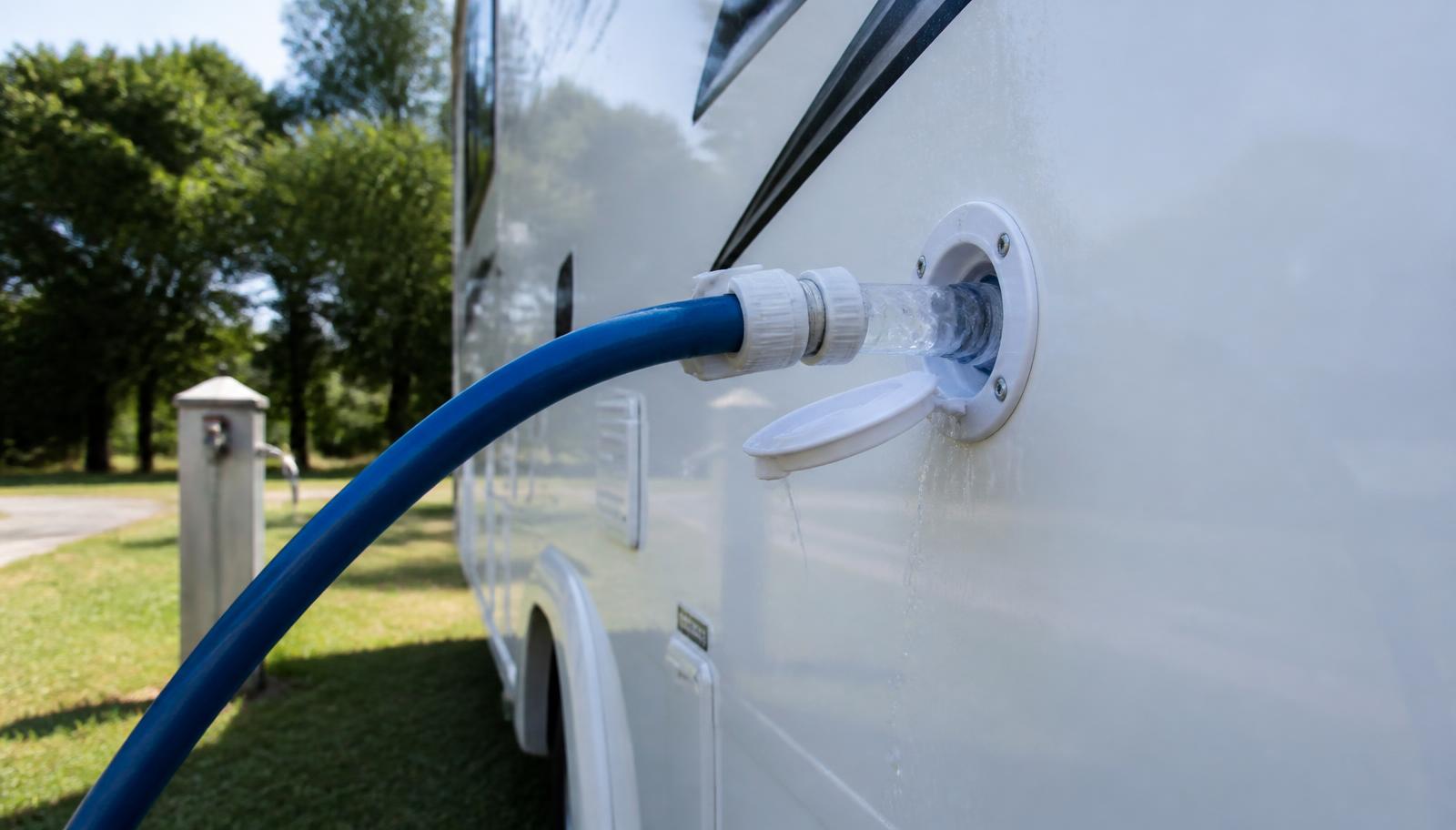
Dirt gets in when filling, via the fill hose, by touching the cap, or because water sits still for a long time. If the system isn't fully drained and dried after use, moisture remains — ideal conditions for micro-organisms.
Extra attention is needed after a long period of standstill. During winter storage, residual water stays in the pipes and tank. Filling with fresh water before the season doesn't mean the interior is clean.
Ordinary rinsing removes loose particles but doesn't disinfect. That's why Iza Effect WATER SYSTEM is recommended: it also reaches pipes, taps, shower and boiler.
What is biofilm and why doesn't water alone remove it?
Biofilm is a layer of micro-organisms and organic matter that clings to the inner surfaces of the tank and pipes. You usually don't see it, because it forms in places you can't reach.
Over time it develops mainly in pipes, connections, against the tank wall and wherever water stands still. It can also occur in the boiler, around the pump, or at the tap outlets.
Filling and draining alone isn't enough: water flows past the surfaces, but the deposits remain. Even clear, odourless water doesn't rule out internal build-up.
WATER SYSTEM is designed to disinfect the water system and helps remove biofilm. The formula contains active oxygen, PAP, silver citrate and stabilisers, and is tested to EN 1040, EN 13727, EN 13624 and EN 14476.
How does WATER SYSTEM treat the whole fresh water system?
WATER SYSTEM isn't just for the tank — it's designed for the hygiene of the complete fresh water system in a motorhome, caravan or camper van.
First fill the tank with clean water, then add the correct amount of product based on the water volume. Always follow the dosage on the packaging.
Switch on the pump and let the solution run through every tap and outlet — kitchen tap, washbasin, shower and any other outlets — until the solution comes out. It's important that the product also reaches the boiler.
Leave to work for at least six hours, then drain the system and rinse with fresh water.
WATER SYSTEM is suitable for plastic and stainless steel. Because it can cause corrosion in some metals, check the materials beforehand and follow the warnings on the label.
When should you use WATER SYSTEM?
Cleaning the fresh water system is especially recommended before the start of the season. If the vehicle has stood idle for months, treat the tank, pipes, boiler and taps before first use.
Treatment also makes sense after a long standstill during the season. If water has sat in the system for weeks, simply topping up isn't enough.
- before a longer trip
- after coming out of winter storage
- if you notice an unusual smell from the water system
- if water has sat in the tank for a long time
- after buying a second-hand motorhome
- if the previous maintenance history is unknown
- before restarting the boiler and shower
How often should you clean your motorhome's water tank?
A fixed rule of thumb helps you not to forget. Disinfect the entire system at least twice a year: when coming out of winter storage in spring, and just before winter storage, so you don't leave contaminated water standing.
If you're on the road all season, a treatment every six to eight weeks is wise — especially in warm weather, since micro-organisms grow considerably faster above 20°C.
In between: drain the tank if the motorhome stands idle for more than a week, and leave the taps open afterwards so the pipes can dry. Standing water is the main cause of a musty smell.
- spring: full disinfection before first use
- peak season: every 6 to 8 weeks
- after any standstill of more than a week: drain the tank
- autumn: disinfect and store the system empty and dry
Musty or rotten-smelling water: what's the cause?
A musty or sulphurous smell from the tap rarely comes from the water itself, but from deposits in the system. In most motorhomes there are three spots to rule out before replacing anything.
The first is the boiler: hot water often sits there for days, which speeds up bacterial growth. The second is the low-lying sections of pipe and the shower hose, where a little water always remains. The third is the fill hose itself — never store it damp and coiled up in a closed cupboard.
If it still smells after a full disinfection and rinse, check whether the smell is coming from the drain rather than the tap. Grey water produces a similar smell and needs a different approach.
Boiler, filter and water hose: the forgotten parts
The boiler is the part most often skipped. When flushing, also open the hot water taps so the solution replaces the boiler's contents. Don't heat the water during the contact time.
If you have a carbon filter or water filter cartridge, remove it before treatment. Activated carbon binds the disinfectant, reducing its effect and rendering the filter itself unusable. Only fit a new cartridge after rinsing.
Treat the fill hose too: let some of the solution run through it, then store it dry, in a separate bag or box. A hose that has been left lying on the ground introduces fresh contamination into a freshly cleaned tank every time you fill up.
Common mistakes when cleaning the water tank
Most disappointments aren't caused by the product, but by how it's applied. These are the mistakes we see most often.
- Treating only the tank and skipping the pipes, shower and boiler — that's exactly where the build-up is.
- Leaving it to work for too short a time: under six hours, the treatment isn't complete.
- Using household bleach or vinegar. Bleach masks the smell and can damage seals; vinegar doesn't disinfect and doesn't dissolve biofilm.
- Leaving the filter cartridge in during treatment.
- Not rinsing after draining, so the water still tastes of the product.
- Putting the system away filled for winter.
Is the water from a motorhome water tank drinkable?
In the Netherlands and Belgium, the water at most campsites and water points is of drinking-water quality. Quality only deteriorates once it's in your own tank and pipes — so the condition of your system determines whether the water stays safe.
Abroad, this can't be taken for granted. Only fill up at points marked as drinking water, always use your own clean fill hose, and never use the hose that's also used for rinsing the cassette.
A disinfected system and freshly drawn water together form the basis. If you're unsure about the source, use the water for showering and washing up, and bring bottled water to drink.
Key takeaways
The product isn't meant to mask odours — its purpose is the hygiene of the inner surfaces of the tank, pipes, boiler and taps.
- Bacteria, fungi and biofilm can develop in the tank, pipes, taps and boiler.
- Draining or rinsing alone is usually not enough for the whole system.
- WATER SYSTEM disinfects the complete fresh water system, not just the tank.
- Run the solution through every tap and leave it to work for at least six hours.
Cleaning and disinfecting your motorhome's water system
PT7H
- 1
Drain the system
Fully drain the old contents of the tank, pipes and boiler via the drain tap and the frost valve. This stops you diluting the product with contaminated leftover water.
- 2
Fill the tank with fresh water
Fill the fresh water tank with clean drinking water and note the number of litres — the dosage is based on this.
- 3
Dose according to the label
Add WATER SYSTEM in the quantity stated on the packaging for your tank capacity. More is not better; stick to the stated dosage.
- 4
Flush every tap
Turn on the water pump and let the solution run from the kitchen tap, the washbasin, the shower (including the handheld shower) and any outdoor shower, until water comes out everywhere. Also open the hot water side so the boiler fills with the solution.
- 5
Leave to work for at least six hours
Let the solution sit in the tank, pipes and boiler for at least six hours. Leaving it overnight is the easiest option.
- 6
Drain
Then fully drain the system: tank, pipes and boiler. Let the pump run dry briefly so the pipes empty too.
- 7
Rinse with clean water
Fill the tank with fresh water and rinse each tap until the water is odourless and neutral in taste. The system is then ready for use.
FAQ
Is rinsing with just water enough?
Rinsing removes loose contamination but doesn't disinfect and doesn't remove biofilm.
Does WATER SYSTEM only clean the tank?
No. Let the solution flow through every tap, the shower and other outlets so it reaches the pipes, boiler and the whole system.
How long does WATER SYSTEM need to work?
According to the label, at least six hours in the system.
Can I use it during the season too?
Yes — after a long standstill of water, before a long trip, or if you notice an odour. Afterwards, drain the system and rinse with fresh water.
Is WATER SYSTEM suitable for all materials?
Suitable for plastic and stainless steel. Other metals can corrode — check the materials beforehand and follow the manufacturer's instructions.
How often should I clean my motorhome's water tank?
At least twice a year: when coming out of winter storage and before winter storage. If you're on the road all season, every six to eight weeks, and more often in warm weather.
Can I use bleach or vinegar to clean the water tank?
Better not to. Household bleach masks the smell, can damage seals and plastic, and isn't dosed for drinking water systems. Vinegar doesn't disinfect and doesn't remove biofilm. Use a product designed and tested for water systems.
Do I need to remove the water filter during treatment?
Yes. Activated carbon binds the disinfectant, reducing its effect and rendering the cartridge unusable. Only fit a new cartridge after rinsing.
Why does the water in my motorhome smell musty?
Usually because of standing water in the boiler, the low-lying pipes or the shower hose, where biofilm forms. A full disinfection of the whole system, including the boiler, resolves this in most cases.
Is the water from the tank drinkable?
Yes, if the system is disinfected and the water comes from a drinking-water point. Abroad: only fill up at points marked as drinking water and always use your own clean fill hose.
Products featured in this article
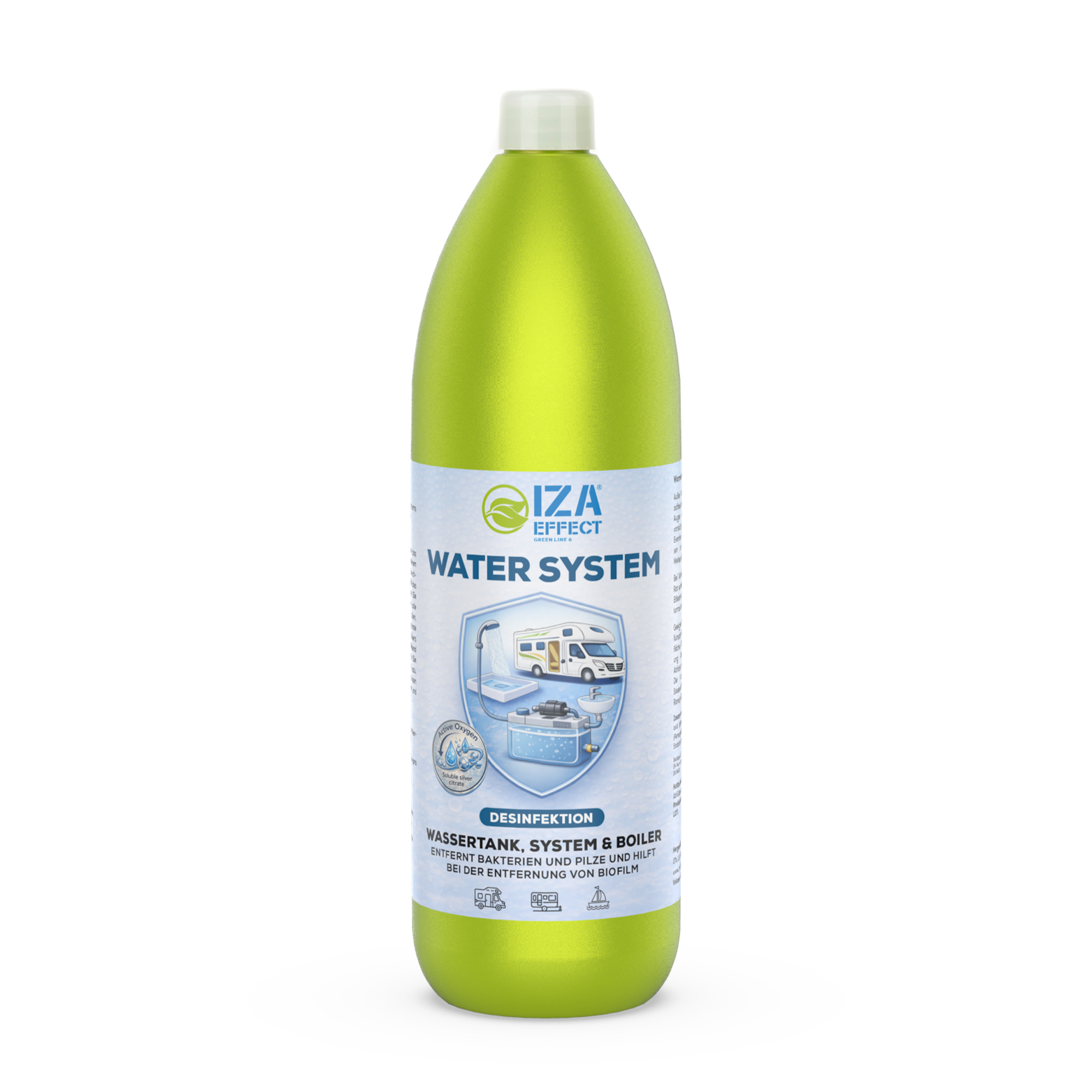 Water System CleanerA natural cleaning and disinfecting agent for the fresh water system in motorhomes.
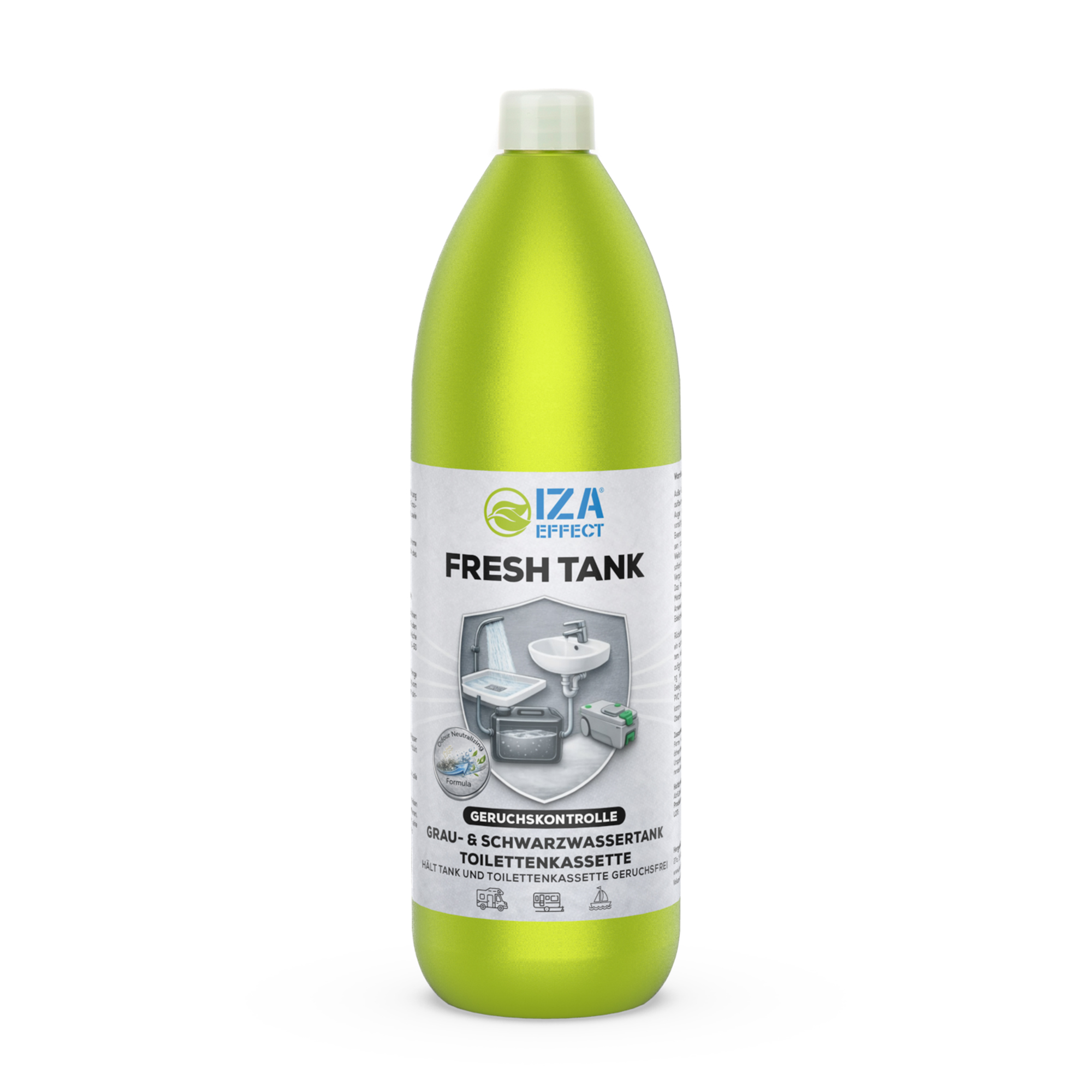 Fresh TankPurpose-built cleaner and odour neutraliser for grey water tanks, drains and toilet cassettes in motorhomes, caravans, campervans and boats.
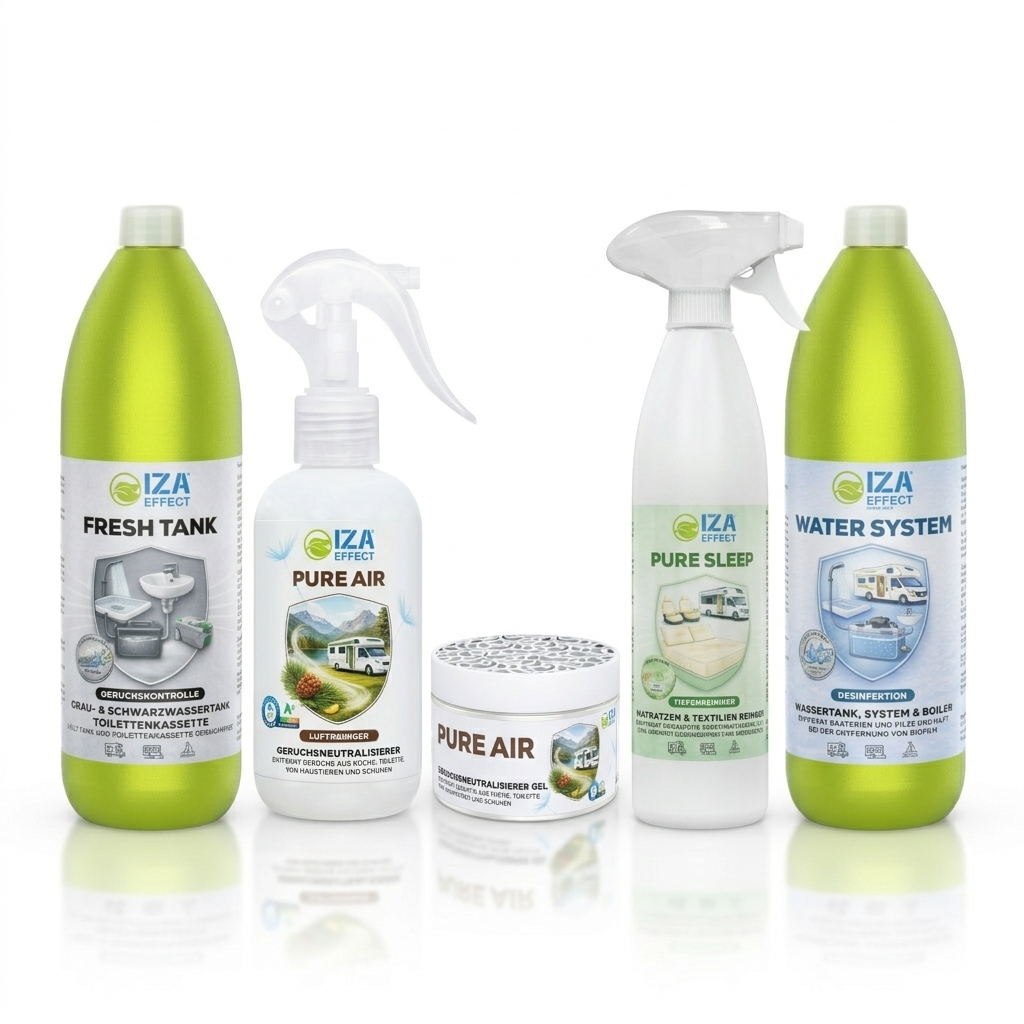 Iza Effect Caravaning SetA complete natural care kit for your motorhome — everything you need on the road, with a 15% discount.
Related articles
How to Prepare Your Motorhome for a Trip in 2026: The Complete Checklist
How to clean the grey water tank in your motorhome and stop bad smells