Natural vs. chemical cleaners for motorhomes: which is the better choice?
Natural or chemical? What matters is not the label, but what a product was designed for, correct dosing and compatibility with the materials in your motorhome.
What do "natural" and "chemical" actually mean for motorhome cleaners?
The words "natural" and "chemical" are often used as opposites, but this division is not always accurate. Water, oxygen, citric acid and plant extracts are chemical substances too. Every cleaner is made up of various substances, so the label "chemical" on its own does not mean a product is aggressive, harmful or unsuitable.
The term natural cleaner usually describes a product containing ingredients of natural origin or one that uses simpler mechanisms of action. However, natural ingredients are not automatically suitable for all materials either. Acids can damage certain metals, essential oils can affect sensitive surfaces, and incorrectly prepared homemade mixtures can cause stains or damage seals.
With purpose-built cleaners, the more important question is what the product was developed for and how it has been tested. A water tank cleaner has a different job to a grey water tank cleaner, and a textile product is not intended for a toilet cassette.
When choosing a cleaner for caravanning or motorhoming, check the intended use, recommended dosage, contact time, material compatibility and the manufacturer's warnings. Choose a product based on the problem, not simply on the "natural" or "chemical" label.
Are natural motorhome cleaners always safer and more environmentally friendly?
A natural origin does not in itself guarantee that a product is safe for every use. Even natural acids, alkaline substances and essential oils can irritate skin, damage surfaces or negatively affect certain materials if the concentration is too high. Composition, concentration, dosage and method of use are what matter.
The same applies to environmental impact. When assessing a product, it is not just the individual ingredient that counts, but also the quantity required, the packaging, how often it is used and correct disposal of the used solution. A very mild product that has to be used in large quantities and repeated several times is not necessarily a better choice than an effective purpose-built product used at the correct dose.
Protecting your equipment also matters when caring for a motorhome. An unsuitable homemade mixture can damage rubber seals, plastic, hoses, the pump or metal parts, resulting in leaks, faults and extra material wear.
A responsible choice therefore means using a purpose-built product, following the instructions and not adding more than recommended. Do not mix products with one another, and only empty solutions at permitted disposal points.
How do hazard labels help when comparing motorhome cleaners?
When comparing cleaners, it is worth checking the back of the packaging too, not just the title and marketing claims on the front. Some products on the market carry pictograms or hazard labels warning of irritation, corrosiveness, flammability or danger to the environment.
Such labels tell the user that extra care, protection or a particular way of handling the product and packaging is needed.
Products in our caravanning range do not carry these hazard labels, which is an important difference compared with many conventional cleaners. Nevertheless, every product should still only be used for its intended purpose, at the recommended dose and in line with the label instructions.
The absence of a pictogram does not mean a cleaner can be used without thought or mixed with other products. When choosing, check the whole label: the product's purpose, material compatibility, method of use, warnings and disposal instructions.
Which motorhome cleaners should you use for each system?
When cleaning a motorhome, one universal product is generally not the best solution. Each system has different materials, contaminants and requirements, so a product should be chosen according to its purpose.
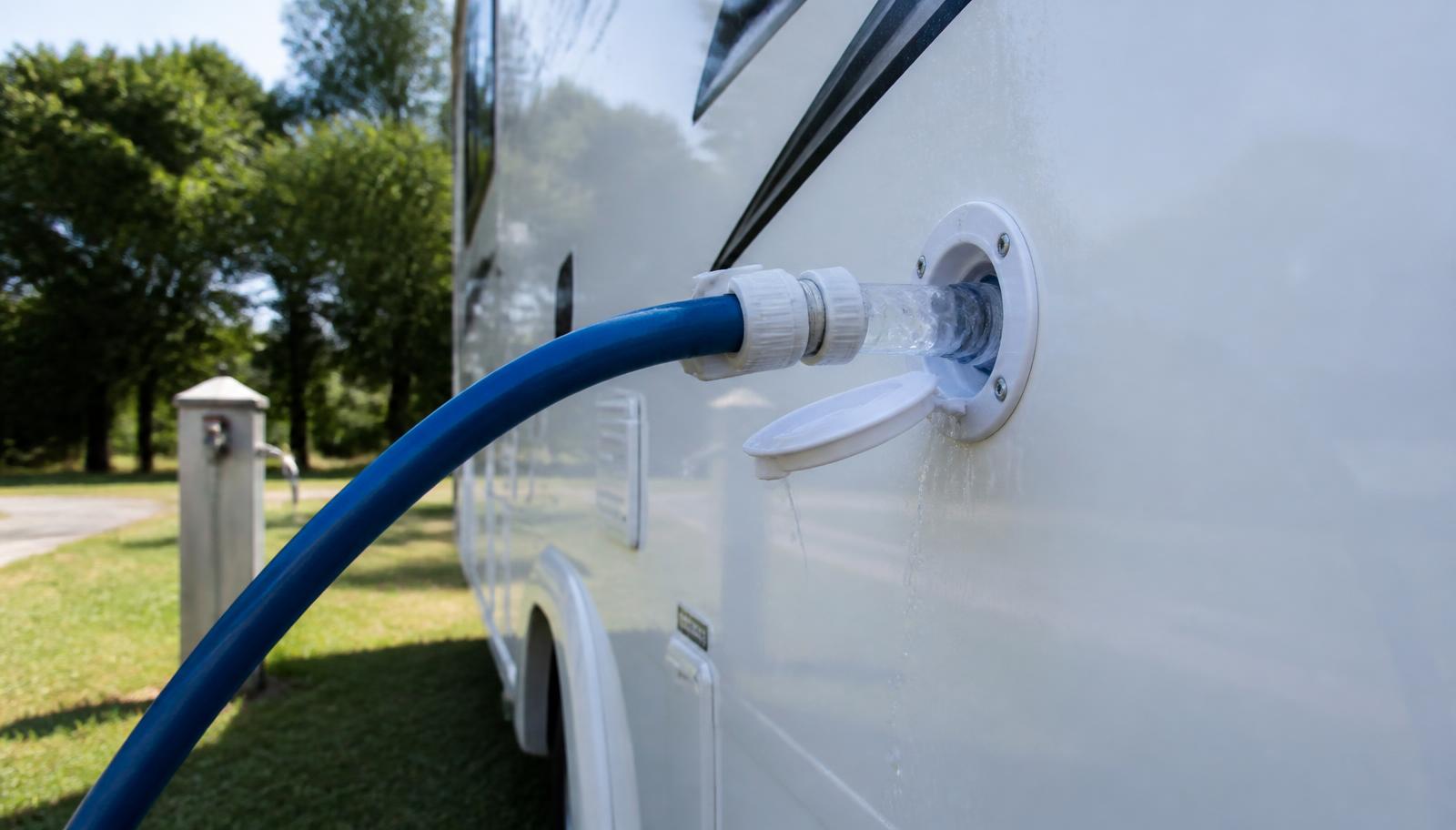
For the fresh water tank, hoses, taps, shower and water heater you need a purpose-built motorhome water tank cleaner. WATER SYSTEM is designed to disinfect the entire fresh water system and helps remove bacteria, fungi and biofilm.
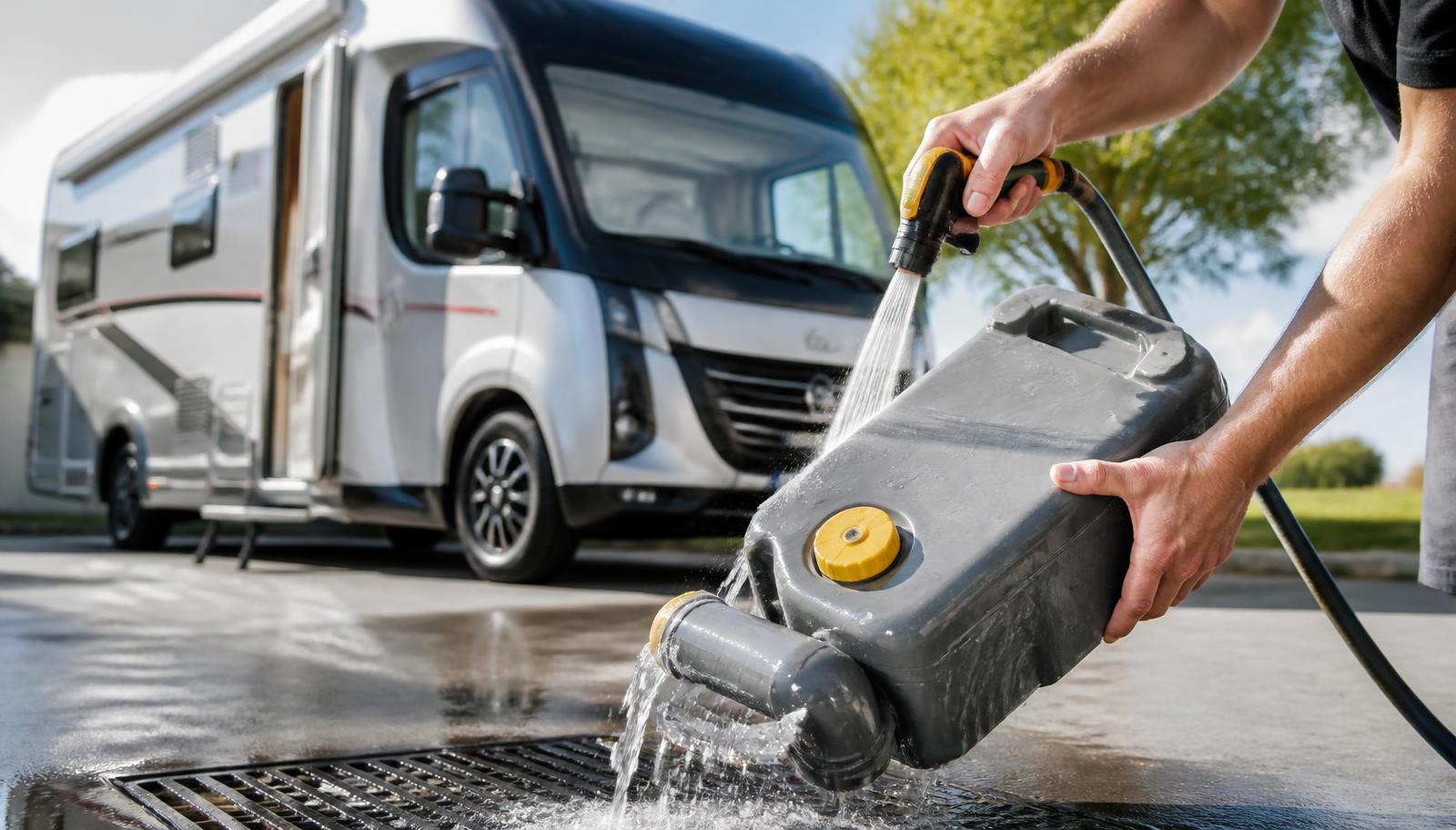
For the grey water canister, use a cleaner designed for the grey or waste water tank. FRESH TANK neutralises unpleasant odours in the grey water system and can also be added as a preventive measure. It is occasionally used to care for an empty, pre-cleaned toilet cassette as well, though it does not break down faecal matter.
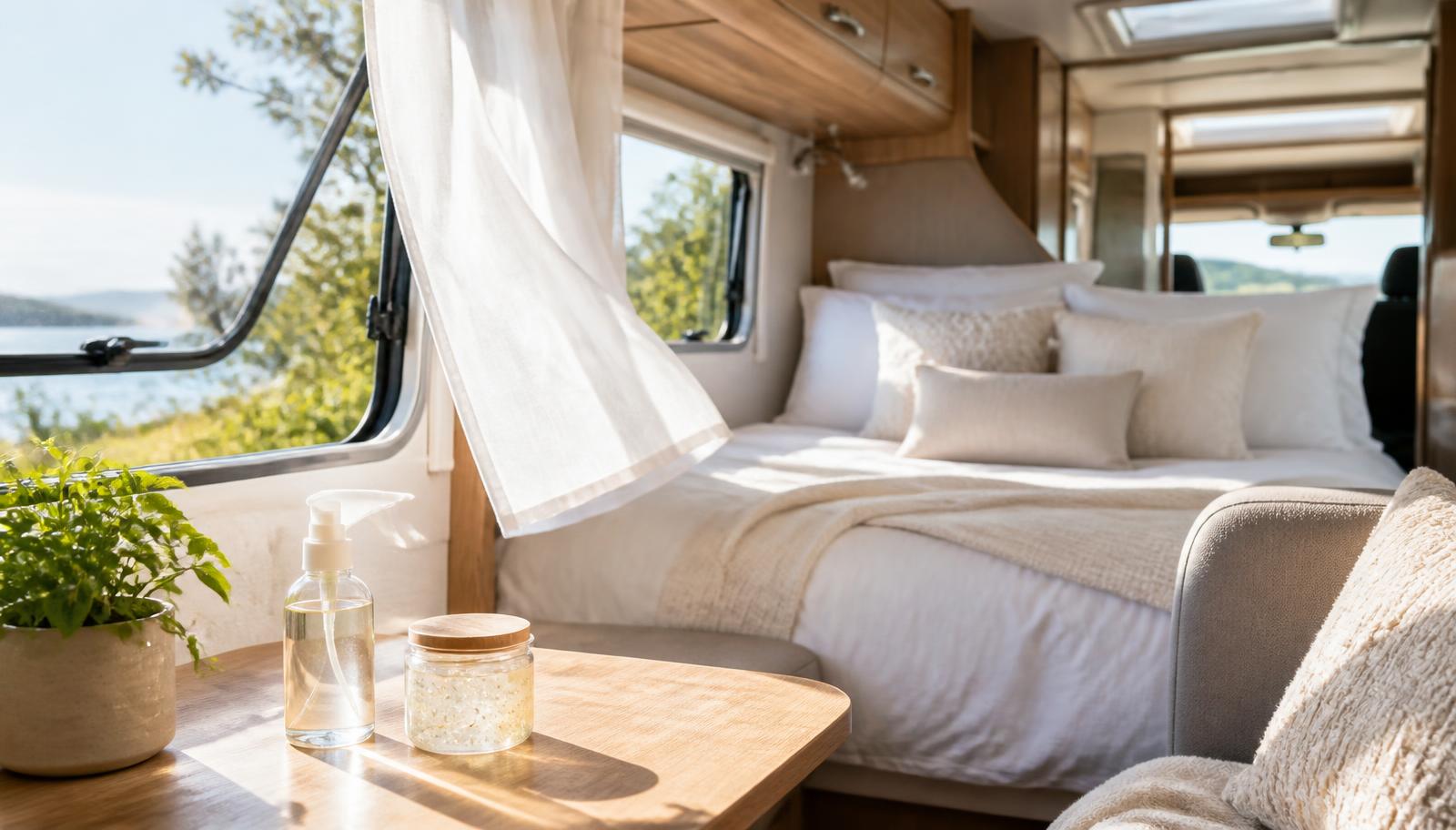
For regular use of the chemical toilet, choose a dedicated fluid, sachets or tablets designed for chemical toilets. PURE SLEEP is suitable for textile surfaces, while PURE AIR SPRAY and PURE AIR GEL are designed to neutralise odours in the living space.
- fresh water tank, hoses and water heater — WATER SYSTEM
- grey water tank and waste water — FRESH TANK
- textiles, mattresses and cushions — PURE SLEEP
- living space and odours — PURE AIR SPRAY, PURE AIR GEL
How to choose effective motorhome cleaners without unnecessarily harsh products
Before buying, first identify the problem you want to solve. Is it biofilm in the water system, odour from the grey water canister, limescale in the toilet cassette, musty textiles, or an unpleasant smell in the living space? Only then choose the appropriate product.
Check which materials the product is suitable for. Motorhome systems contain plastic, rubber, stainless steel, various metals and sensitive fittings. A cleaner that works well around the house is not necessarily suitable for a motorhome's hoses, valves, seals or tanks.
Pay attention to the dosing instructions too. A larger quantity of product does not necessarily give a better result — it can lead to unnecessary waste, make rinsing harder or put extra strain on materials.
Good motorhome care does not require the largest number of products, but rather a few correctly chosen solutions for each system. This makes cleaning clearer, more effective and gentler on your equipment.
- The label "natural" does not mean a product is suitable for all surfaces and systems.
- When choosing, check the purpose, composition, dosing, contact time and material compatibility.
- Use different purpose-built products for the water system, grey water tank, toilet cassette, textiles and living space.
- Products in our caravanning range carry no hazard labels, but should still always be used according to the instructions.
- Effective motorhome care is based on choosing the right product, not on a simplified split between natural and chemical.
FAQ
Are natural motorhome cleaners always better?
No. What matters more than the "natural" label is the product's purpose, correct dosing, effectiveness and compatibility with materials.
Can I use ordinary household cleaners in my motorhome?
This is not recommended without checking the instructions. Some products can damage plastic, rubber seals, valves or metal parts of the system.
Which cleaner should I use for the grey water tank?
Use a purpose-built cleaner for the grey or waste water tank. FRESH TANK is designed to neutralise odours and provide preventive care for this system.
Can I use a water tank cleaner in the toilet cassette as well?
Do not use products outside their intended purpose. WATER SYSTEM is designed for the fresh water system; for the toilet cassette, use appropriate chemical toilet products instead.
What do hazard labels on cleaners mean?
Pictograms warn of certain hazardous properties and the precautions needed when using the product. Products in our caravanning range do not carry these labels, but the instructions on the label should always be followed.
Products mentioned in this article
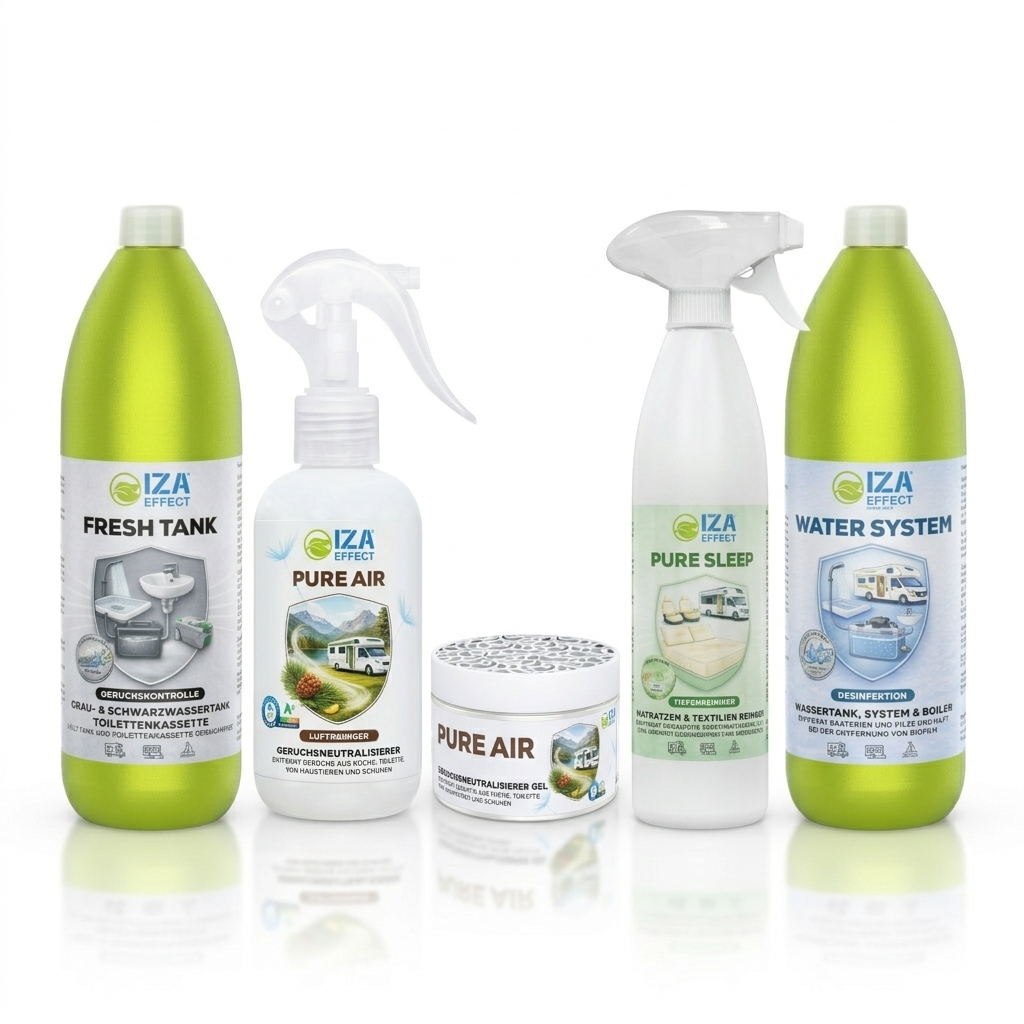 Iza Effect Caravaning SetA complete natural care kit for your motorhome — everything you need on the road, with a 15% discount.
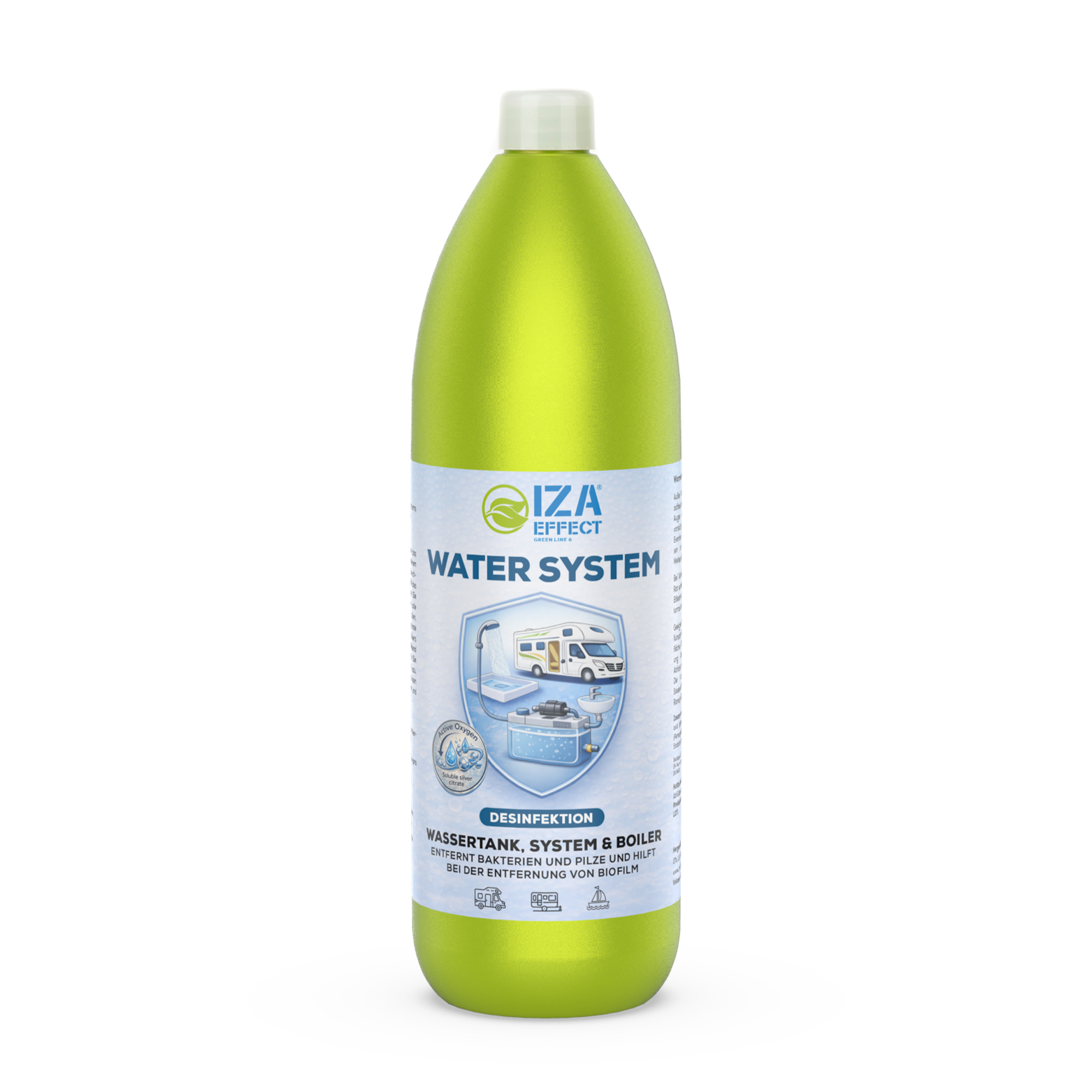 Water System CleanerA natural cleaning and disinfecting agent for the fresh water system in motorhomes.
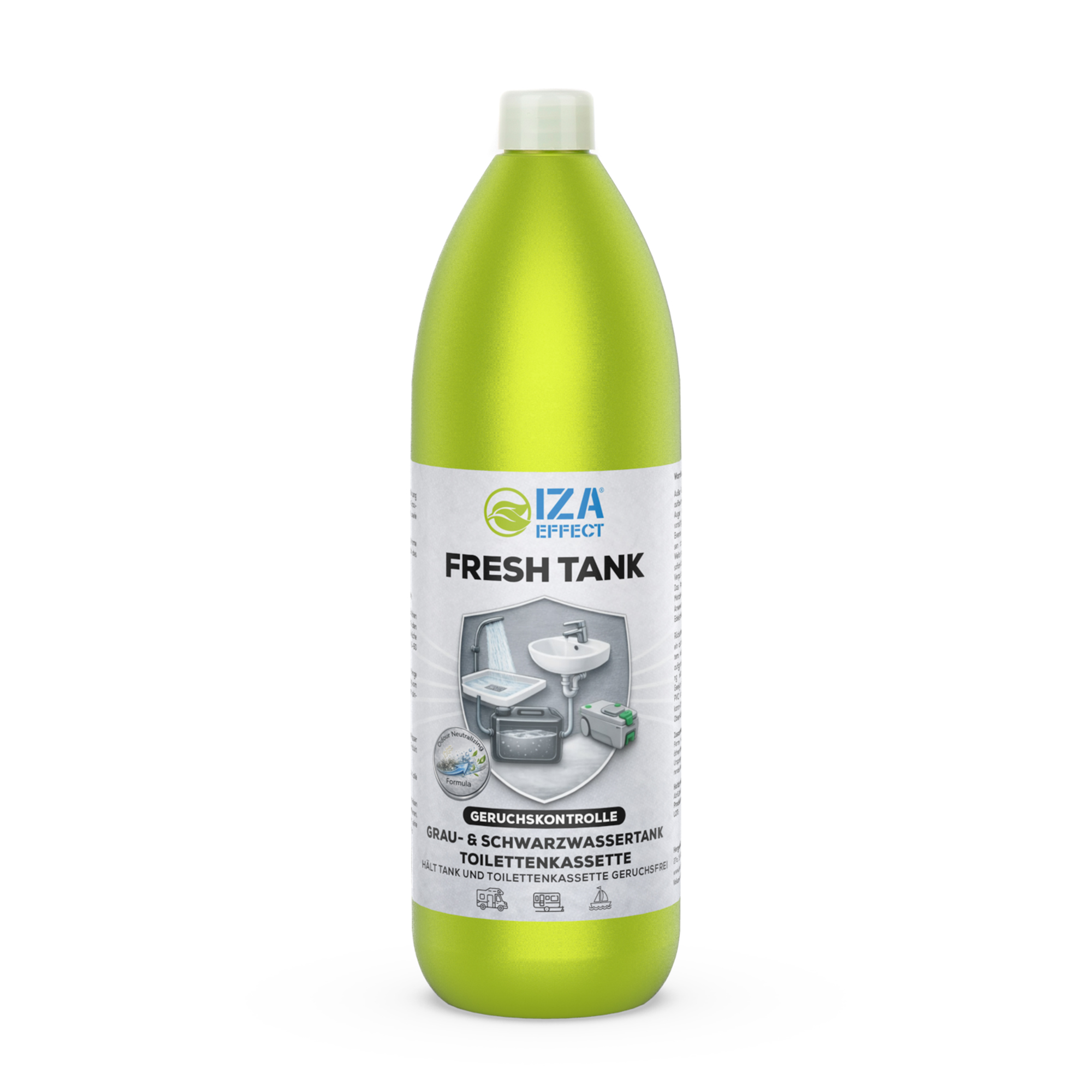 Fresh TankPurpose-built cleaner and odour neutraliser for grey water tanks, drains and toilet cassettes in motorhomes, caravans, campervans and boats.
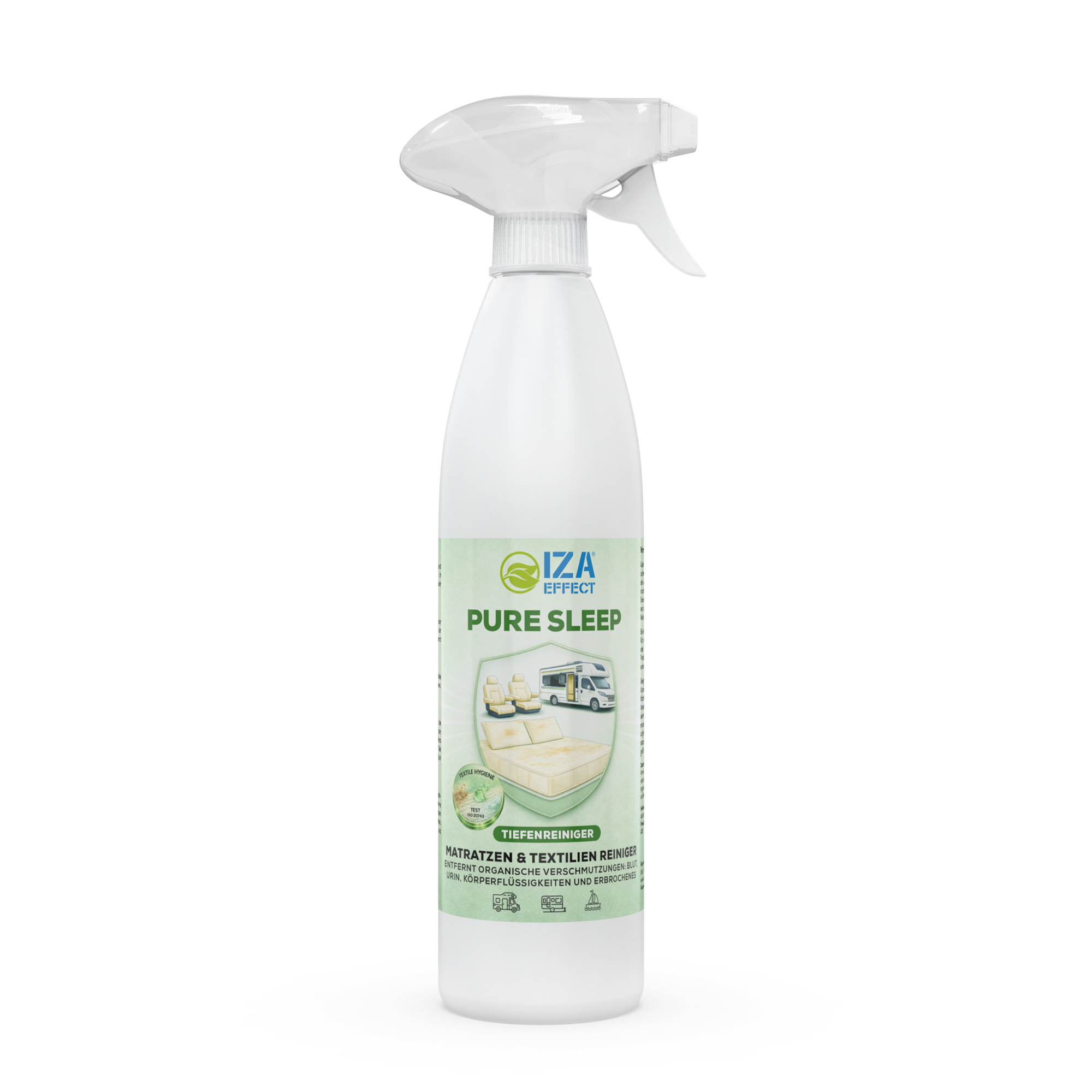 Pure SleepPure Sleep is a natural cleaner and freshener for fabric surfaces, developed for a cleaner, fresher and more pleasant feel in motorhomes, caravans and boats.
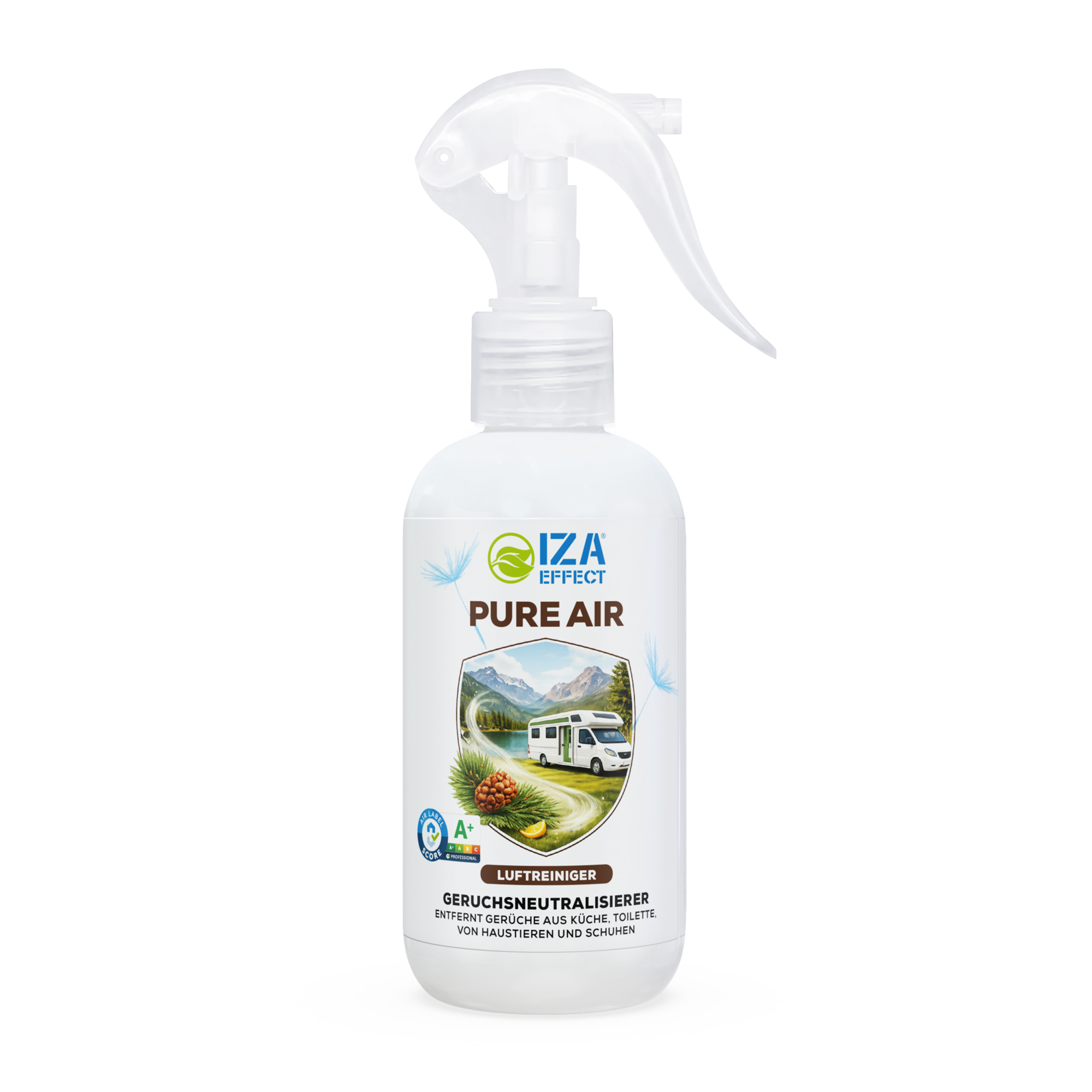 Pure Air SprayA natural spray for fresh air in your motorhome, vehicle cabin, mobile home and tent — without artificial fragrances.
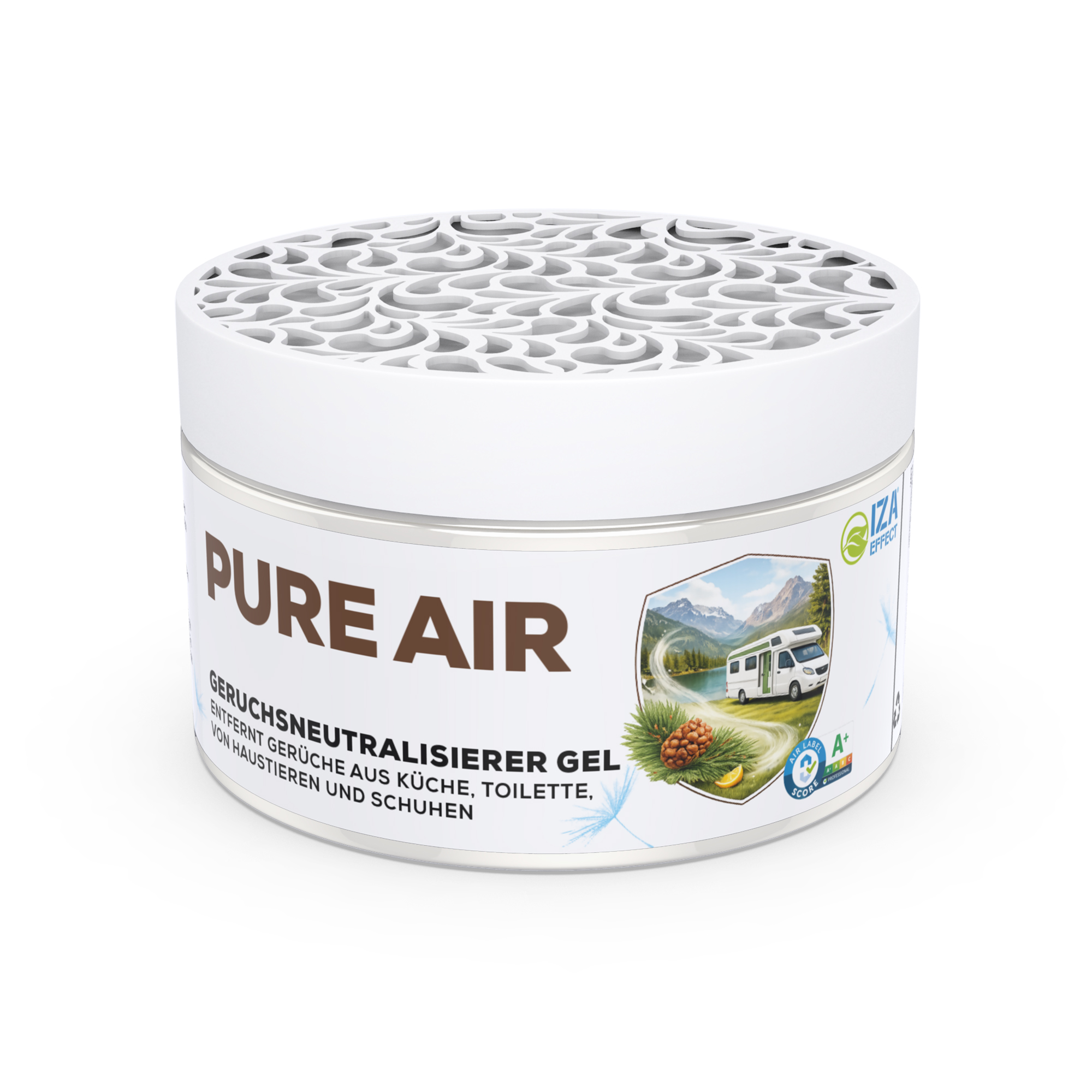 Pure Air GelA natural gel for long-lasting air freshness in any space.