RV winter storage: how to prevent odour and mould inside your motorhome
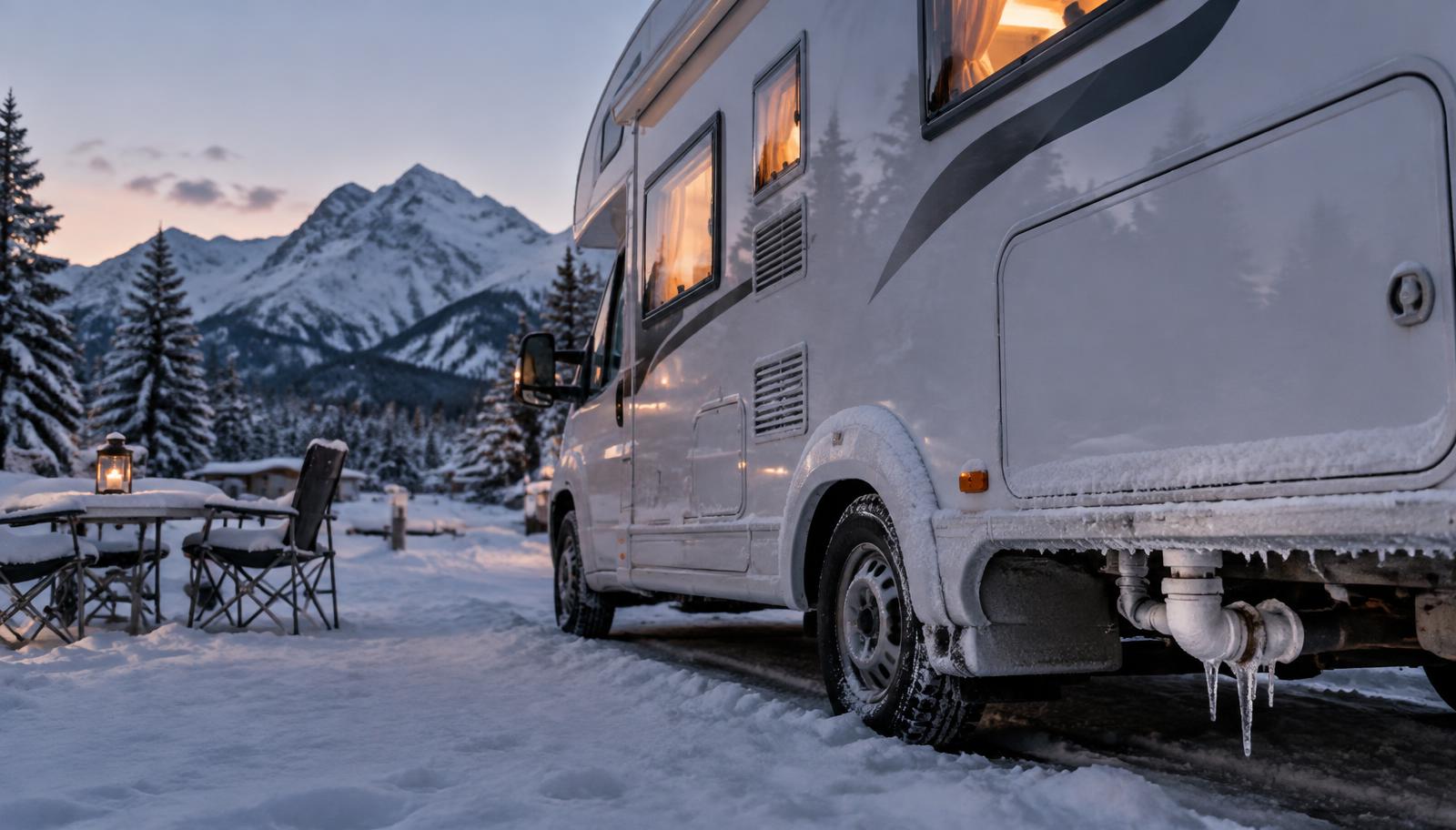
Proper RV winter storage is far more than emptying a few cupboards. Damp, leftover water and dirty textiles can lead to unpleasant odours and mould. With careful cleaning, prepared water systems and ventilation, you'll come back in spring to a fresh interior.

Why do odour and mould appear during motorhome winter storage?
A motorhome is a relatively small, well-sealed space where moisture can build up quickly. During the season it's brought in by wet clothing, towels, cooking, showering, sports gear, and travelling with children and pets. If damp textiles or wet items are left in the vehicle before storage, the problems continue after use ends.
Extra moisture comes from condensation, poor air circulation, minor leaks and water left in pipes, drains or other parts of the system. Unpleasant odours can also develop in the grey water tank, toilet cassette, fridge, bin or cupboards where food, crumbs and other organic residue remain.
A quick surface clean before winter storage simply isn't enough. Check harder-to-reach spots under mattresses, in corners, cupboards, drawers and storage areas. Pay particular attention to pet beds, child seats, sports equipment, shoes and towels.
Good motorhome care starts with removing every source of moisture and dirt before the vehicle is closed up for an extended period.
How do you prepare the water system, grey water tank and toilet cassette before winter storage?
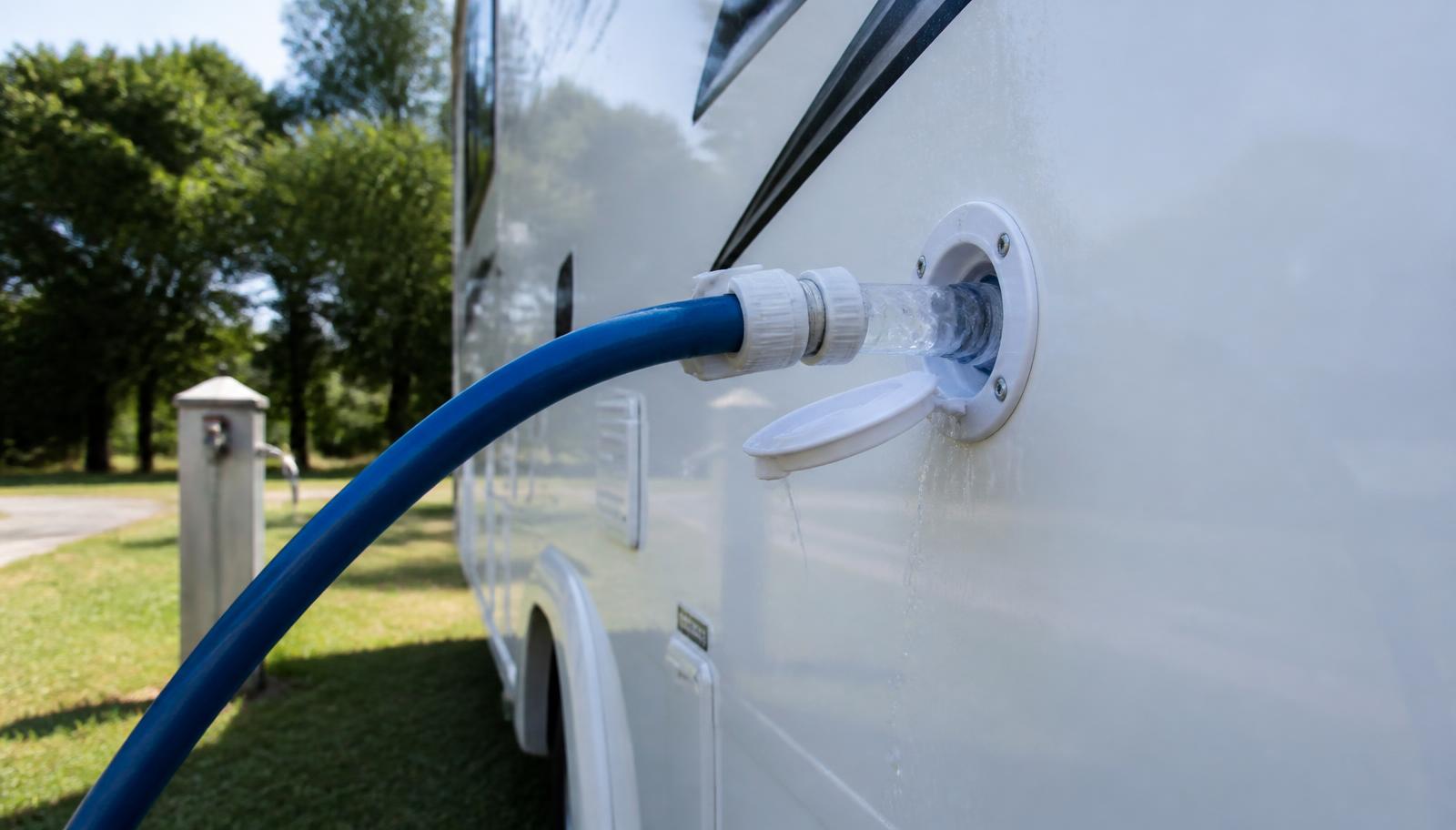
Before winter storage, drain every part of the water system and follow the vehicle manufacturer's instructions on frost protection. Check the fresh water tank, pipes, pump, taps, shower and boiler. Open the designated drains and make sure no water is left in the system that could cause damage at low temperatures.
If water has been sitting in the tank for a while, use a dedicated motorhome water tank cleaner before the final drain. WATER SYSTEM is designed to disinfect the entire water system, so the prepared solution needs to reach the pipes, taps, shower and boiler too.
Empty the grey water tank at an approved disposal point before storage. Leftover food, grease, soap and other residue can cause unpleasant odours on the inner surfaces even when the tank appears empty. FRESH TANK can be used as a grey water tank cleaner to neutralise existing odours or preventively before a long period of storage.
Empty and clean the toilet cassette as well. For regular use, use a dedicated fluid or another chemical toilet cleaner. FRESH TANK can occasionally be used to care for an empty, pre-cleaned cassette, but it does not break down waste and does not replace standard toilet chemicals.
How do you clean the interior and prevent unpleasant odours in a motorhome?
Before winter storage, remove all food, drinks, rubbish, cosmetics and anything that could attract pests or cause unpleasant odours. Clean and dry the fridge and freezer compartment, and leave the door slightly open to prevent stuffiness inside.
Thoroughly vacuum the floors, seats, beds, mattresses, curtains and the areas under furniture. Prop mattresses up or reposition them so air can circulate underneath. If left lying flat on a cold surface with no airflow, condensation can start to build up beneath them.
Remove wet towels, swimwear, sports clothing, shoes and equipment from the vehicle. Also clean child seats, toys, carriers, blankets and pet beds. PURE SLEEP can be used to care for textile surfaces that are hard to wash, such as seats, mattresses, cushions and curtains.
PURE AIR SPRAY is suitable as an odour neutraliser for motorhomes when you need to treat odours in the living space. The difference between a fragrance and a neutraliser matters: a fragrance mainly masks the smell, while a neutraliser acts on the substances that cause it. Before closing up the vehicle, the interior must be clean and completely dry.
Is it a good idea to wrap a motorhome airtight in plastic sheeting over winter?
Protecting a motorhome from rain, snow and dirt makes sense, but it shouldn't be sealed so tightly that air around the vehicle and inside it can no longer circulate. Impermeable sheeting can trap moisture that forms because of temperature differences between the vehicle and the protective material.
If moisture can't escape, exterior and interior surfaces stay damp for longer. This can lead to stuffiness, staining, material damage and mould. Use a cover designed for motorhomes, fitted correctly, that allows for ventilation.
A real example: one of our customers had their motorhome completely wrapped in plastic sheeting over winter. Because the space had no proper airflow, moisture built up under the sheeting. When the customer opened the vehicle in spring, mould had spread across a large part of the interior. We resolved the issue with thorough cleaning and the use of Izaeffect STOP PLESEN, designed to remove mould and prevent it from returning.
How do you ensure ventilation and keep an eye on your motorhome over winter?
Before winter storage, check all seals around windows, doors, roof hatches and service flaps. Damaged or hardened seals can let water in, which may not be noticed in time during a long period of storage. Also inspect the roof, joints, drains and areas around roof fittings.
Leave the internal doors of cupboards and drawers open so air can circulate in enclosed spaces too. Move cushions and mattresses away from external walls. Don't block ventilation openings or cover them with objects or sheeting, as they're designed for constant airflow.
Check on your motorhome occasionally during winter storage, especially after heavy rain, snowfall or major temperature swings. Watch out for condensation, damp corners, unusual smells, staining around windows and changes to textiles. A minor issue is far easier to manage if it's spotted early.
You can use suitable moisture-control aids, but they don't replace tackling the cause. A regular check is a simple part of the caravanning routine that can prevent a demanding spring clean-up.
Key takeaways
- Before winter storage, drain and properly prepare the water system, grey water tank and toilet cassette.
- Remove all wet items, food, rubbish and dirty sports or child equipment from the interior.
- Check and care for mattresses, seats, curtains and pet beds.
- Don't seal a motorhome airtight with ordinary plastic sheeting, as moisture can build up underneath it.
- Check on the vehicle occasionally over winter and act quickly if condensation, odour or damp patches appear.
What does classic blue chemical fluid leave behind, and what's the natural alternative?
Classic chemical toilet fluids (Thetford Aqua Kem Blue, Elsan Blue and similar 'blue' products) work by using chemical biocides to slow decomposition. Before winter storage, this means the product sits in contact with plastic and rubber seals for months.
The natural alternative works differently: active oxygen breaks down organic residue and the source of the odour, rather than masking it. Since it contains no formaldehyde, it's better suited to winter storage and to campsites that increasingly restrict the discharge of harsh chemicals.
A simple rule applies for winter storage: rinse the cassette and grey water tank thoroughly, then leave them empty and dry. Only dose the product again at first use in spring.
- Blue fluids: quickly suppress odour, but leave chemical residue and are restricted at some campsites.
- Active oxygen: breaks down the cause of the odour, formaldehyde-free, suitable for long storage.
- For winter: an empty, dry cassette is always better than one holding any kind of fluid.
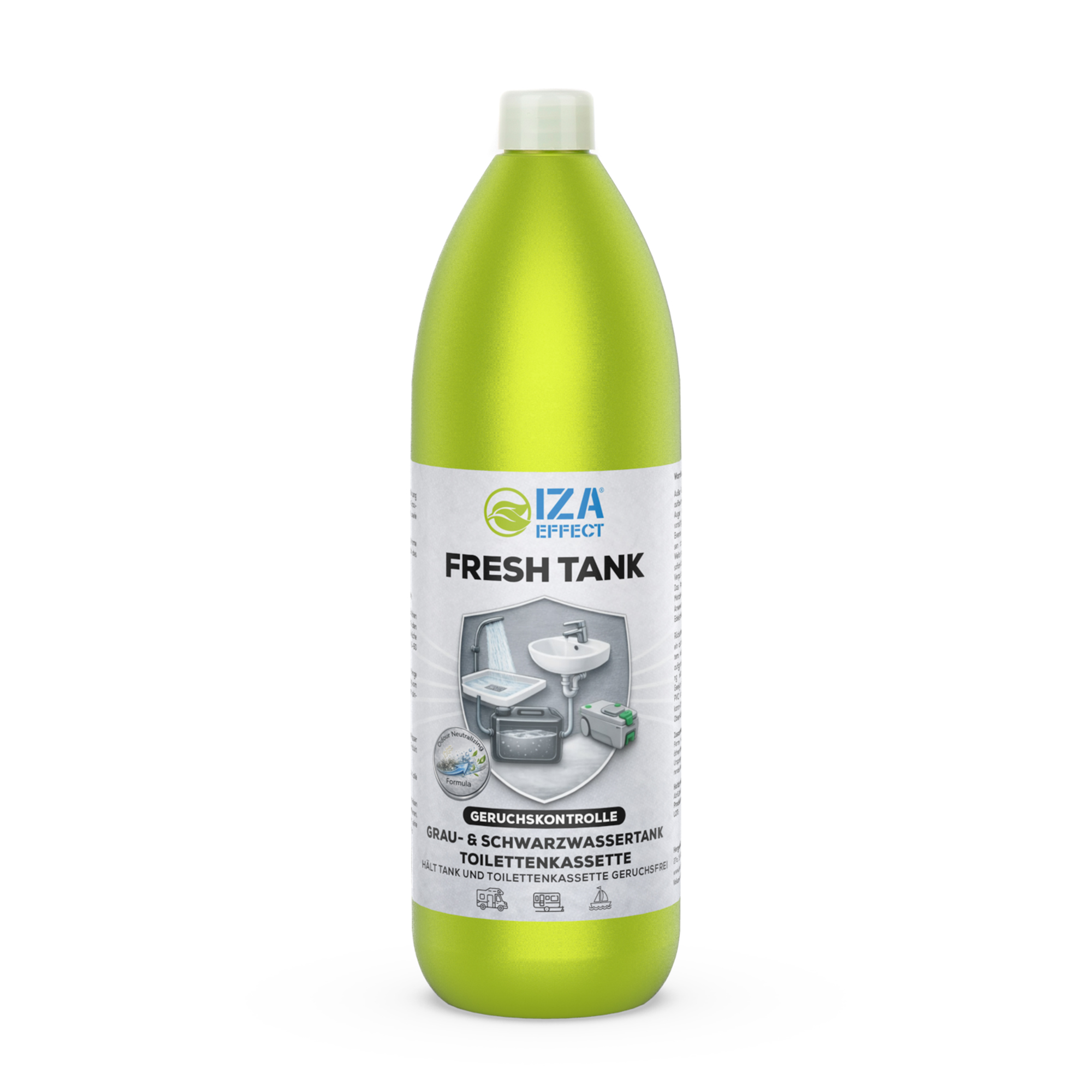
Fresh Tank
Purpose-built cleaner and odour neutraliser for grey water tanks, drains and toilet cassettes in motorhomes, caravans, campervans and boats.
Read moreWhere should you empty the toilet cassette in winter, and which products do campsites allow?
Empty the cassette and grey water only at designated disposal points — at a campsite, a motorhome service point or a service station. Discharging into nature or storm drains is prohibited and fined in all our markets.
More and more campsites are banning products containing formaldehyde in their rules, as it destroys the bacterial culture in the site's treatment system. Products based on active oxygen are explicitly permitted at these sites.
Most service points are closed or without water in winter, so empty and rinse the cassette before your last drive home — then leave it empty, open and dry.
Which cleaner does your caravan need?
Three questions and you'll get a recommendation.
1 / 3
Where does the smell bother you most?
What should you do about a frozen valve, hardened seals and acrylic windows?
Never force open a frozen grey water valve or heat it with a flame. Move the vehicle somewhere warmer instead, or wait for the ice to thaw — a cracked seal costs more than a whole season's worth of cleaning products.
Clean the rubber seals around windows, doors and service flaps with a mild product, then care for them with silicone grease. Alcohol and acetone dry them out, causing the seal to harden and start letting water in.
Acrylic windows are delicate: avoid dry wiping, alcohol and ammonia-based products. Use plenty of water, a soft cloth and a mild cleaner, otherwise micro-cracks form that later let moisture in.
Dosage calculator
Choose the system and enter the volume — we'll calculate the recommended dose.
Recommended dose
200 ml
Basis: Water System 300 ml/100 L fresh water, Fresh Tank 200 ml/100 L grey water or 250 ml/10 L cassette.
Recommended product
Fresh Tank
Purpose-built cleaner and odour neutraliser for grey water tanks, drains and toilet cassettes in motorhomes, caravans, campervans and boats.
Read moreHow to prepare a motorhome for winter storage, step by step
PT3H
- 1
Drain the water system
Drain the fresh water tank, boiler, pipes and pump, and open all taps so no water remains in the system.
- 2
Clean the water system
Before the final drain, add Water System Cleaner (300 ml per 100 L), leave to work for 6 hours and rinse with clean water.
- 3
Prepare the grey water tank
Empty the grey water tank at an approved disposal point, add Fresh Tank (200 ml per 100 L), leave to work and rinse thoroughly.
- 4
Empty the toilet cassette
Empty and clean the cassette, then leave it empty, open and completely dry — without any fluid left in contact with the seals.
- 5
Clean and dry the interior
Remove food and damp textiles, vacuum, treat mattresses and seats, and leave cupboard doors open.
- 6
Ensure ventilation
Don't wrap the vehicle airtight, keep ventilation openings clear, and check on the motorhome occasionally over winter.
FAQ
Does the grey water tank need to be empty before winter storage?
Yes. Empty the tank at an approved disposal point and prepare it so that no water, dirt or strong unpleasant odours remain inside.
Can I use FRESH TANK preventively?
Yes. FRESH TANK can be used when an odour appears, or preventively before unpleasant smells develop in the grey water tank.
Do I need to remove all textile items from the motorhome?
Not necessarily, but they must be completely dry and properly positioned. Mattresses, cushions and curtains should have enough space for air to circulate.
Can I wrap my motorhome in ordinary plastic sheeting over winter?
Impermeable sheeting can trap moisture and restrict ventilation. Use a cover designed for motorhomes and fit it according to the manufacturer's instructions.
What should I do if I find mould in spring?
First find and eliminate the source of the moisture. Then treat the affected surfaces with a dedicated product such as Izaeffect STOP PLESEN, following the instructions on the packaging.
Can I leave blue fluid in the cassette over winter?
We don't recommend it. The product sits in contact with plastic and seals for months. Instead, empty the cassette, clean it and leave it empty, open and dry.
Where can I empty the toilet cassette in winter?
At designated disposal points at campsites and motorhome service areas. As many are closed in winter, empty the cassette before your last drive home.
What should I do if the grey water valve freezes?
Don't force it open or heat it with a flame. Wait for the ice to thaw, or move the vehicle somewhere warmer.
Products mentioned in this article
Fresh TankPurpose-built cleaner and odour neutraliser for grey water tanks, drains and toilet cassettes in motorhomes, caravans, campervans and boats.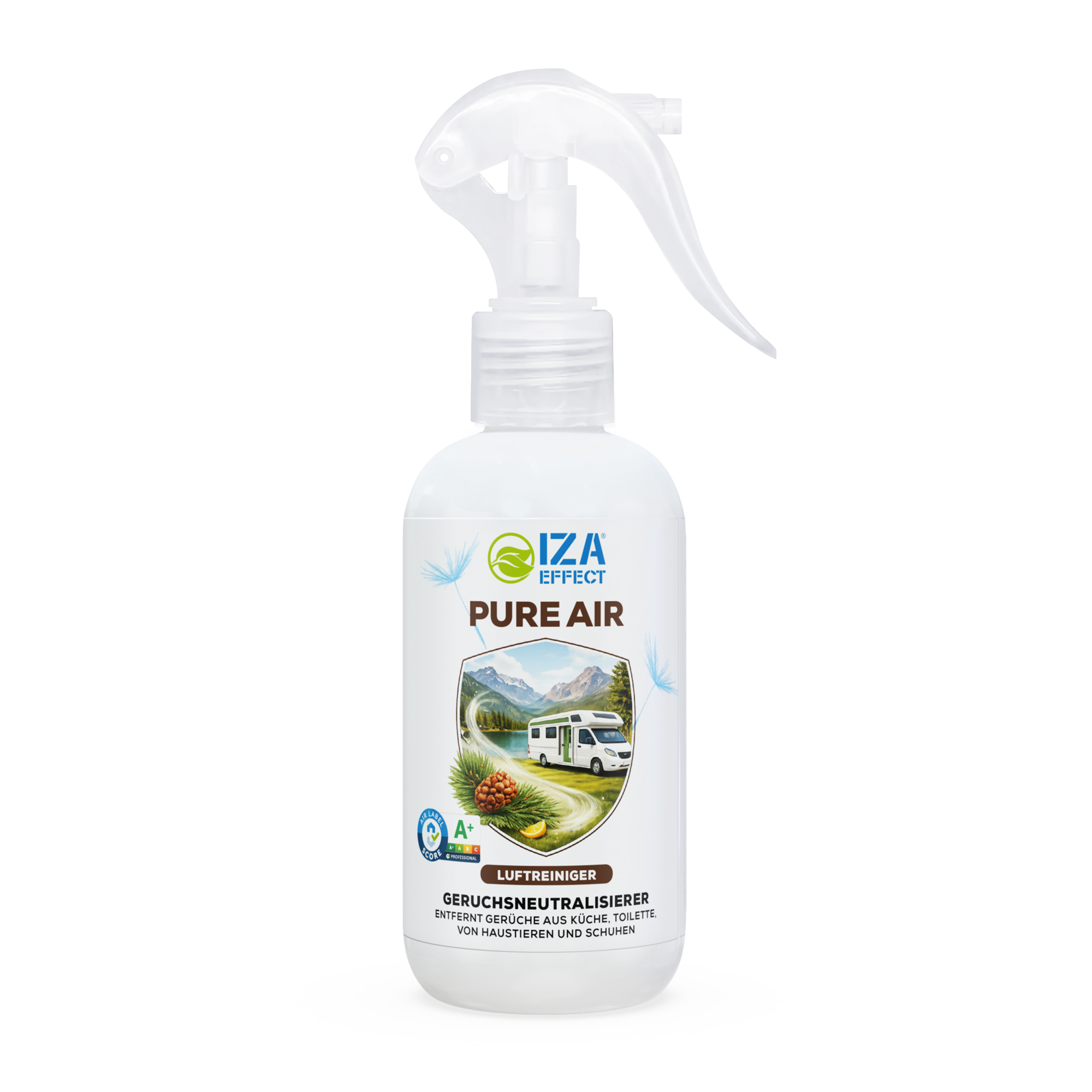 Pure Air SprayA natural spray for fresh air in your motorhome, vehicle cabin, mobile home and tent — without artificial fragrances.
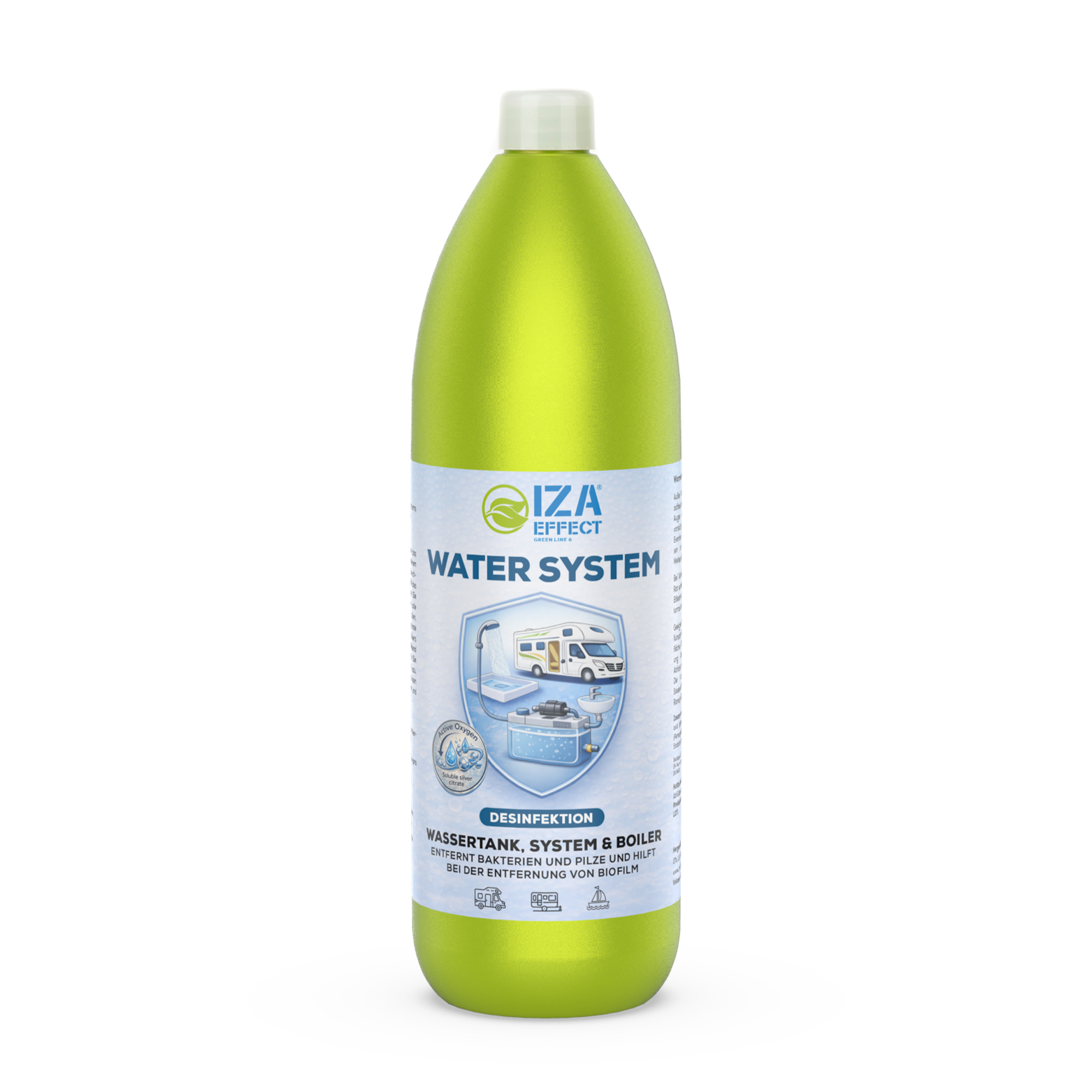 Water System CleanerA natural cleaning and disinfecting agent for the fresh water system in motorhomes.
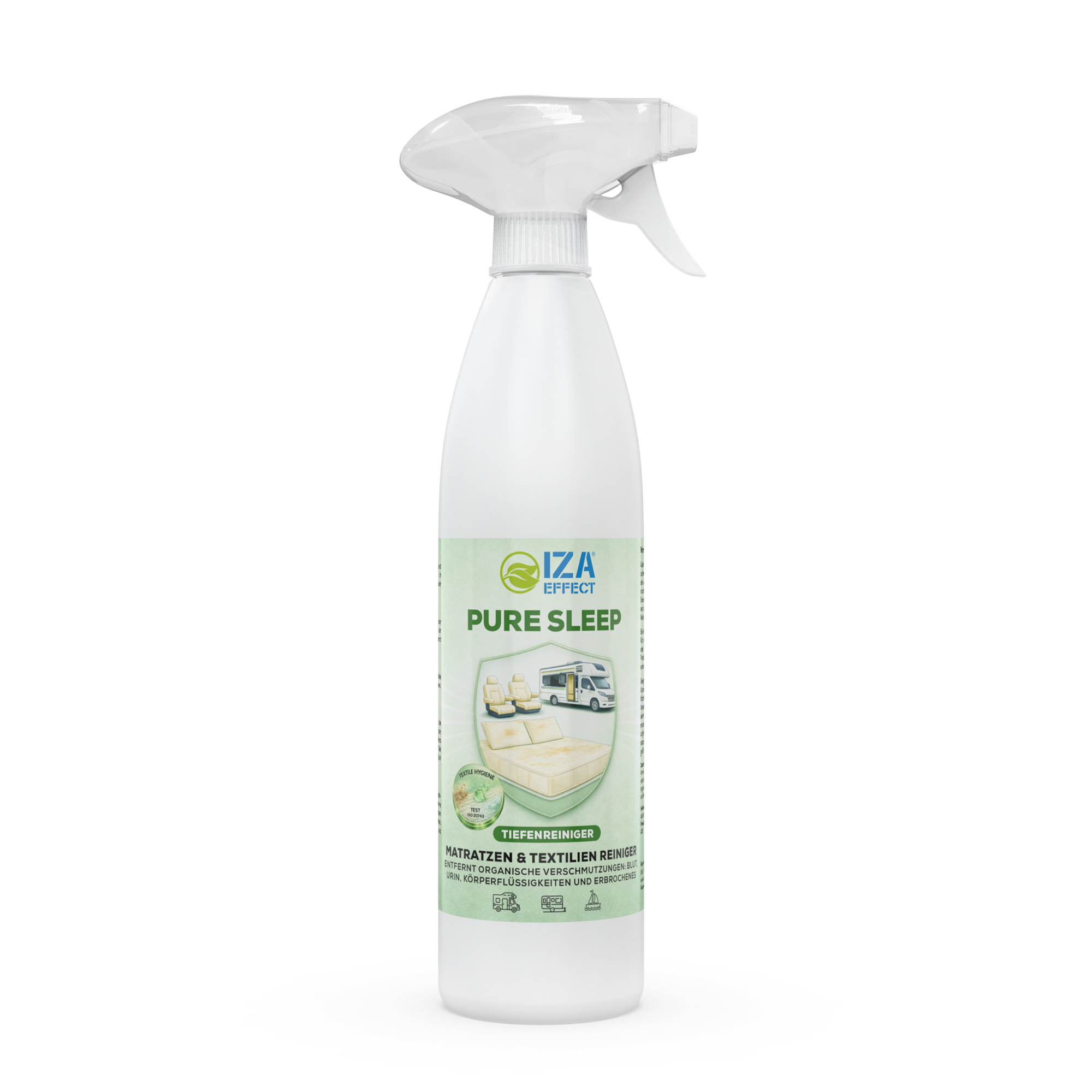 Pure SleepPure Sleep is a natural cleaner and freshener for fabric surfaces, developed for a cleaner, fresher and more pleasant feel in motorhomes, caravans and boats.
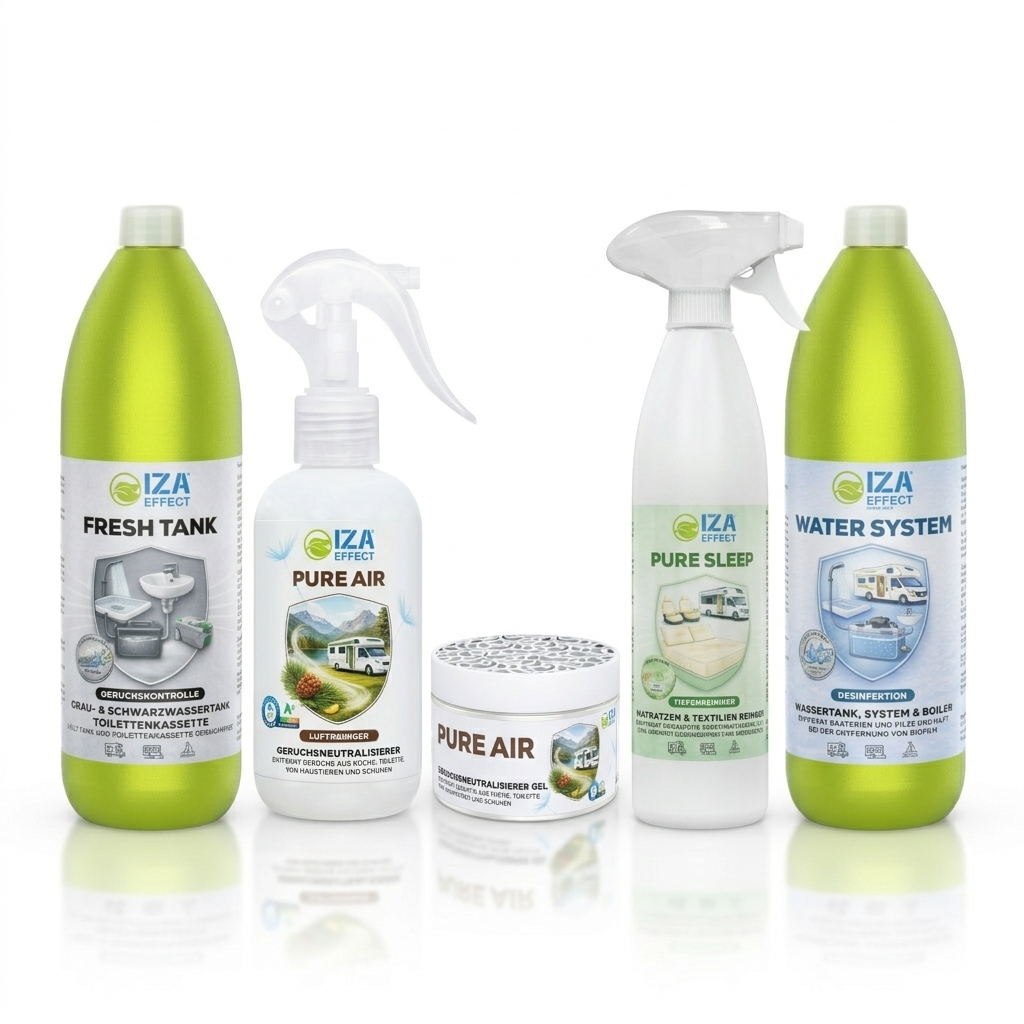 Iza Effect Caravaning SetA complete natural care kit for your motorhome — everything you need on the road, with a 15% discount.